

TL;DR:
- Most adaptive learning platforms adjust content at a broad category level, not true individualization. Adaptive learning is most effective in structured subjects like math and science and limited by shallow data and limited creativity support. Successful implementation requires teacher training, transparent algorithms, and ongoing assessment focused on engagement and equity.
Most education leaders assume that when a vendor labels their software “adaptive,” students are getting a truly individualized experience. That assumption is costing schools real results. The reality is that the majority of adaptive learning platforms adjust content at a broad category level, not at the level of the individual learner’s cognitive state, motivation, or cultural context. This guide cuts through the marketing noise. You will find clear definitions, honest assessments of where these tools deliver, practical frameworks for platform selection, and implementation steps grounded in what actually moves the needle on student engagement and outcomes.
Table of Contents
- What is adaptive learning? Core principles and definitions
- Where adaptive learning excels—and where it falls short
- Selecting and evaluating adaptive learning platforms
- Best practices for successful adaptive learning implementation
- What most leaders overlook about adaptive learning’s true value
- Explore advanced AI solutions for education
- Frequently asked questions
Key Takeaways
| Point | Details |
|---|---|
| Adaptive learning explained | True adaptive learning adjusts instruction in real time based on each learner’s data. |
| Best use cases | Adaptive learning excels in structured subjects like math and science at scale. |
| Platform selection tips | Prioritize platforms with complete data, privacy safeguards, and evidence in your subject area. |
| Implementation best practices | Use pilot programs, strong teacher training, and equity-focused evaluation beyond test scores. |
| Educator’s role | Adaptive systems work best when guiding teachers, not replacing them, to boost engagement. |
What is adaptive learning? Core principles and definitions
Adaptive learning refers to technology-driven instruction that modifies the pace, content sequence, or learning path based on ongoing student performance data. Unlike static curricula that move every student through the same material at the same rate, adaptive systems use algorithms to detect gaps and adjust in real time. That sounds powerful, and in the right context, it is. But the word “adaptive” covers a wide range of actual functionality.
There are at least three distinct levels of adaptivity in today’s platforms:
- Category-level adaptation: The system places students in broad performance bands (e.g., “struggling,” “on track,” “advanced”) and routes them to corresponding content libraries. Most platforms operate here.
- Skill-level adaptation: The system tracks mastery of individual competencies and adjusts assignments accordingly. This is more granular and more effective.
- True individual-path adaptation: The system builds a dynamic model of each learner, factoring in prior knowledge, learning pace, and even time-of-day performance patterns. Very few platforms actually achieve this.
Understanding learning analytics in education is essential before evaluating any platform, because the quality of the underlying data determines the quality of adaptation. As one analysis notes, adaptive learning systems adjust pace, content, or path based on student data but vary widely in true personalization.
Adaptive learning also differs from student-led or project-based learning models. Those approaches give learners agency over topics and methods. Adaptive platforms control the path and adjust it algorithmically. Both have value, but they are not the same thing.
One critical reality check: no AI-only solution has yet replicated the effectiveness of a skilled human teacher providing targeted one-on-one instruction. The landmark “2-sigma” finding by educational psychologist Benjamin Bloom showed that individual tutoring produces two standard deviations of improvement. AI in schools is closing the gap, but AI alone has not matched it. Combine this with the nuances of machine learning in education and you quickly see why the human element cannot be automated away.
“The promise of adaptive learning is real, but so is the gap between marketing claims and what most platforms actually deliver. Leaders owe it to their students to ask harder questions.”
Misconceptions are common. Many leaders believe that purchasing an adaptive platform automatically produces personalized learning. It does not. The platform is a tool. The outcomes depend on data quality, teacher involvement, and implementation discipline.
Where adaptive learning excels—and where it falls short
With this foundation, it’s crucial to know when and how adaptive learning adds value, along with what it can’t yet do.
Adaptive learning performs best in structured, skill-sequential subjects where mastery of one concept directly enables the next. Mathematics and introductory science courses are the clearest examples. Gateway college courses in algebra and statistics have shown measurable improvements in pass rates when adaptive tools are implemented thoughtfully.
| Context | Adaptive learning fit |
|---|---|
| Math and science (K-12 and college gateway) | Strong fit |
| Reading comprehension and literacy | Moderate fit |
| Writing, debate, and creative disciplines | Poor fit |
| Social-emotional learning | Poor fit |
| Test prep and skill-drill scenarios | Strong fit |
| Project-based collaborative work | Poor fit |
As research confirms, adaptive tools work best for structured subjects like math and science, are less effective for creative or exploratory learning, and require teacher involvement for best results.
Here are the top three limitations you need to plan around:
- Shallow data: Most platforms rely on quiz performance and click behavior. They miss motivation, prior life experience, and cultural context, all of which shape how students learn.
- Limited creativity support: Adaptive algorithms optimize for measurable right-or-wrong answers. They cannot evaluate an essay argument, a design solution, or a scientific hypothesis with genuine nuance.
- Engagement and motivation gaps: Algorithmic pacing can frustrate students who feel they have no agency. Without teacher mediation, students may disengage.
It’s also worth noting that challenges with adaptive learning often stem from overstated claims. Most platforms adapt at the category level, not true individual paths, which means the personalization gap is wider than marketing materials suggest.
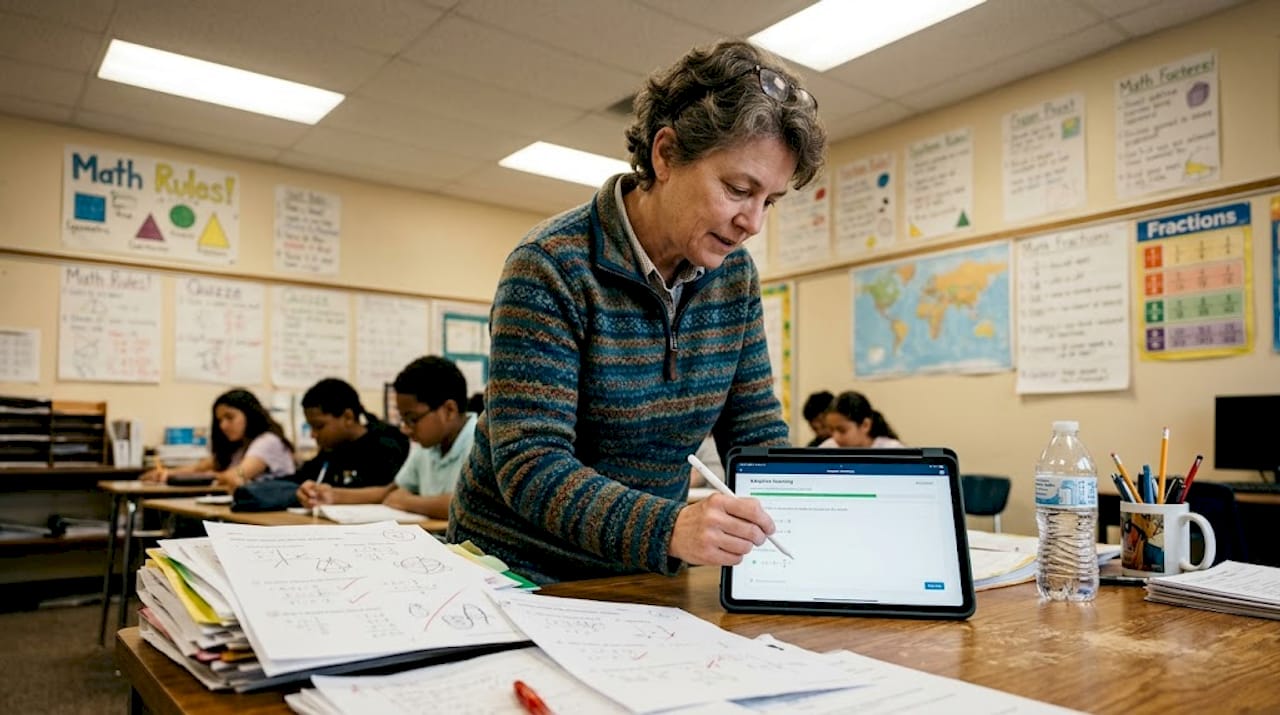
For leaders evaluating adaptive learning in education, the mitigation strategy is straightforward: keep teachers central, require transparency from vendors on how the algorithm actually works, and invest in teacher training for adaptive platforms before rollout.
Pro Tip: Pilot adaptive tools in your highest-enrollment, most structured courses first. These settings give you the clearest signal on what the platform actually does, with the lowest risk of disrupting complex, relationship-driven instruction.
Selecting and evaluating adaptive learning platforms
Now that you know where adaptive works, let’s discuss how to choose the right technologies and avoid common pitfalls.
The platform selection process is where many institutions go wrong. Vendor demonstrations look impressive. But a compelling demo is not evidence of efficacy. You need a structured evaluation framework built around your specific student population and instructional goals.
Here are the must-have requirements for any platform you consider seriously:
- Published efficacy evidence specific to your subject area and student demographics
- Modular content architecture so you can customize without rebuilding from scratch
- FERPA and COPPA compliance with clear data retention and deletion policies
- LTI (Learning Tools Interoperability) integration with your existing LMS
- Human-in-the-loop dashboards that give teachers actionable, real-time insight
- Transparent adaptation logic so educators understand what triggers content changes
This matters because 73% of adaptive platforms use incomplete data, and modular content combined with teacher training are critical for producing real outcomes.
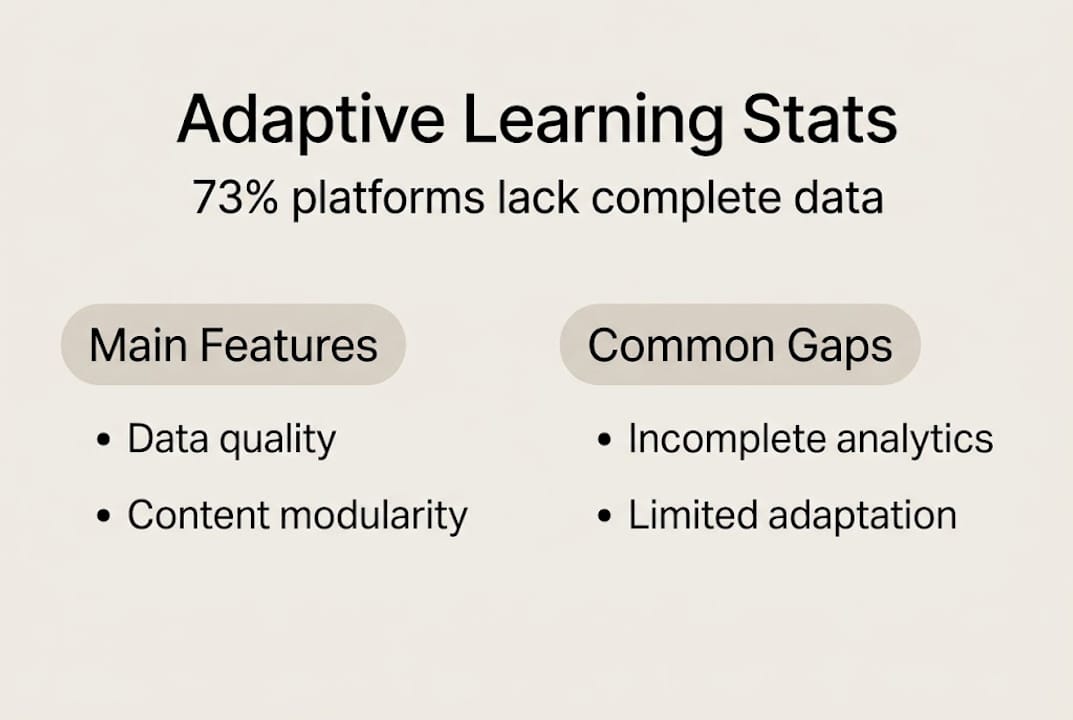
| Feature | Why it matters | Red flag |
|---|---|---|
| Content modularity | Allows customization | Locked, proprietary content only |
| Data completeness | Drives better adaptation | Relies on quiz scores alone |
| Privacy compliance | Protects students | Vague data policies |
| LTI support | Fits your LMS | Standalone-only platforms |
| Teacher dashboards | Keeps humans in the loop | AI-only decision making |
For strategies for rolling out edtech, always validate vendor claims with schools that have a similar profile to yours. A case study from a wealthy suburban district does not predict results for a diverse urban school.
Pro Tip: Ask every vendor to show you their adaptation logic in writing. If they cannot explain precisely what data triggers a content change, their platform is operating as a black box. That is a risk you should not accept with student data.
If you want a detailed walkthrough of platform requirements, the AI-powered education implementation guide provides a step-by-step process aligned to K-12 and higher education environments. Also review implementation best practices to benchmark your process against current field standards.
Best practices for successful adaptive learning implementation
After choosing the right platform, success depends on thoughtful implementation and ongoing assessment.
Even the best platform fails without a structured rollout. The following sequence reduces risk and accelerates time to measurable results:
- Pilot one subject. Select a structured course with clear learning objectives and a willing instructor. Collect baseline data on engagement, pass rates, and time-on-task before launching.
- Train on dashboards first. Teachers need to be fluent in reading the platform’s analytics before students ever log in. Dashboard literacy is the single most overlooked implementation step.
- Monitor for bias and equity issues. Watch for patterns where specific student subgroups consistently receive lower-level content. This can indicate biased training data in the algorithm.
- Iterate based on real outcomes. Review data monthly, not just at the semester end. Make adjustments to content modules, pacing thresholds, and teacher intervention triggers.
For teacher professional development, focus on these areas:
- Interpreting adaptive dashboards and acting on the data
- Communicating to students why their learning path looks different from peers
- Integrating adaptive assignments with classroom discussion and project work
- Using platform insights to identify students who need direct human support
As research recommends, leaders should prioritize pilot implementations, support teacher training, use multimodal data for equity, and evaluate engagement rather than just grades.
“If your success metric is only a test score, you will miss the real transformation that adaptive tools can enable: a classroom where teachers spend less time on remediation and more time on meaningful human connection.”
Consider a real-world scenario: a diverse middle school launches an adaptive math pilot in sixth grade. Teachers review dashboard data weekly. Counselors are looped in when specific students show repeated disengagement signals. After one semester, the school sees a 14% reduction in failing grades and a measurable increase in students self-reporting confidence in math. That result came not from the algorithm alone, but from the human layer wrapped around it. Review measuring student engagement metrics to build a balanced success framework, and explore edtech solution risks and benefits before committing to a multi-year contract. For additional guidance, adaptive learning implementation tips offer practical checklists aligned to district-level rollouts.
What most leaders overlook about adaptive learning’s true value
Beyond execution, a deeper lesson emerges for leaders who want to maximize adaptive learning’s impact.
We have seen institutions invest significantly in adaptive platforms and measure success entirely through efficiency metrics: time-on-task, quiz completion rates, and cost per student mastery event. Those numbers improve. But the leaders who see the most durable gains measure something harder to quantify: teacher capacity to connect with students.
When adaptive tools handle routine skill-drilling and gap identification, teachers are freed to do what no algorithm can: build trust, motivate students facing adversity, and bring cultural context into learning. That is where engagement becomes lasting. A platform optimizing for correct answers cannot account for the student who disengages because the content feels disconnected from their lived experience.
AI’s impact in education is most significant not when it replaces human judgment but when it equips educators with information they did not previously have. Shift your evaluation frameworks to reward creativity, equity outcomes, and student agency alongside test performance.
Pro Tip: Treat adaptive learning adoption as a professional development initiative first and a technology initiative second. The schools achieving the strongest results lead with teacher buy-in, not platform features.
Explore advanced AI solutions for education
If you’re ready to act on these insights, here are curated resources and checklists for powerful next steps.
At Airitual, we work directly with K-12 districts and higher education institutions to evaluate, select, and implement modern AI tools for education that are matched to your specific goals, student population, and existing infrastructure. Whether you are in early exploration or ready to scale a successful pilot, our approach is consultative and evidence-based. Use our implementing AI-powered education guide to build your rollout plan, and download the AI platform selection checklist to ensure every vendor evaluation is structured, rigorous, and aligned to your institutional priorities. Schedule a FREE Strategy Session to speak with an advisor who understands your context.
Frequently asked questions
How does adaptive learning differ from personalized learning?
Adaptive learning uses algorithms to adjust instruction in real time based on performance data, while personalized learning is a broader philosophy that includes student goals, relationships, and varied methods. Most adaptive systems adapt at the category level, not true individualization, which is an important distinction for leaders setting expectations.
Which subjects benefit most from adaptive learning?
Adaptive learning is most effective in structured subjects like mathematics and science, especially gateway courses at the secondary and college level. The strongest evidence exists in math and science with large, diverse learner populations.
What are the biggest risks of adaptive learning platforms?
Key risks include data privacy vulnerabilities, shallow adaptation based on incomplete data, teacher over-reliance on algorithmic recommendations, and the potential to reinforce existing bias. Data privacy and shallow data challenge most platforms, making oversight and compliance non-negotiable.
How should schools measure adaptive learning success?
Effective measurement goes well beyond test scores and includes student engagement rates, retention trends, equity across subgroups, and teacher-reported confidence in using data. Success indicators that include engagement and equity give a more complete picture of platform impact.
Recommended
- Learning analytics: a practical guide for educators in 2026 | Artificial Intelligence
- How to Personalize Learning With AI for Student Success | Artificial Intelligence
- AI for personalized feedback: Boost engagement and outcomes | Artificial Intelligence
- AI for education checklist: choose top tools confidently | Artificial Intelligence
Recent Comments