

What makes a machine truly intelligent in the classroom is its ability to learn from real student data and adapt instruction in meaningful ways. For educational technology leaders across the United States and Canada, understanding how machine learning transforms educational research and daily practice is more relevant than ever. This guide explores the fundamentals and practical methods of integrating intelligent systems—from predicting student performance to creating adaptive learning environments—that will help drive measurable results in both engagement and academic success.
Table of Contents
- Defining Machine Learning In Education
- Types Of Machine Learning Used In Schools
- How Machine Learning Improves Student Engagement
- Real-World Applications And Success Stories
- Risks, Ethics, And Equity Concerns
- Best Practices For Integrating Machine Learning
Key Takeaways
| Point | Details |
|---|---|
| Machine Learning Transforms Education | Machine learning applies advanced algorithms and data analysis to enhance student learning, predict performance, and create personalized pathways. |
| Diverse Approaches Enhance Learning | Supervised, unsupervised, and reinforcement learning methods offer unique capabilities for analyzing student behavior and tailoring educational experiences. |
| Improved Student Engagement | Machine learning effectively identifies disengagement, emotional motivation, and cognitive processing, allowing for targeted interventions and support. |
| Addressing Ethical and Equity Concerns | Implementation of machine learning in education requires careful consideration of algorithmic bias and equitable access to technology to ensure fair outcomes for all students. |
Defining Machine Learning in Education
Machine learning represents a powerful computational approach transforming educational research and practice through sophisticated algorithms and data analysis techniques. By leveraging computational power and advanced mathematical models, machine learning enables unprecedented insights into student learning processes, educational outcomes, and personalized instructional strategies.
At its core, machine learning in education involves using intelligent systems that can learn and improve from experience without being explicitly programmed. These systems analyze large datasets to identify patterns, predict student performance, and create adaptive learning environments. Sophisticated ML approaches in education encompass multiple learning methodologies:
- Supervised Learning: Uses labeled data to train predictive models
- Unsupervised Learning: Identifies hidden patterns in unlabeled datasets
- Reinforcement Learning: Develops adaptive systems that improve through interaction
Educational machine learning applications are diverse and transformative. Intelligent tutoring systems can provide personalized feedback, adaptive learning platforms customize curriculum based on individual student needs, and learning analytics help educators understand complex student engagement dynamics.
Machine learning represents more than technological innovation – it’s a paradigm shift in understanding and supporting educational processes.
The potential of machine learning extends beyond traditional assessment methods. By analyzing comprehensive student performance data, these systems can:
- Predict potential learning challenges
- Recommend targeted interventions
- Create individualized learning pathways
- Enhance overall educational effectiveness
Pro tip: Start small by identifying specific, measurable educational challenges where machine learning could provide targeted insights and incremental improvements.
Types of Machine Learning Used in Schools
Machine learning in educational settings encompasses three primary approaches, each offering unique capabilities for enhancing learning experiences and educational outcomes. Systematic machine learning techniques provide educators with powerful tools to analyze, predict, and personalize student learning strategies.
Supervised Learning represents the most prevalent machine learning method in educational contexts. This approach involves training models using labeled datasets to make precise predictions about student performance. Key supervised learning techniques include:
- Decision trees for performance classification
- Support vector machines for complex pattern recognition
- Random forests for comprehensive data analysis
- Logistic regression for probability-based predictions
Unsupervised learning offers a different approach by identifying hidden patterns within unlabeled educational datasets. These methods help educators discover unexpected insights about student behaviors, learning styles, and potential intervention strategies. Clustering algorithms can group students with similar learning characteristics, enabling more targeted educational support.
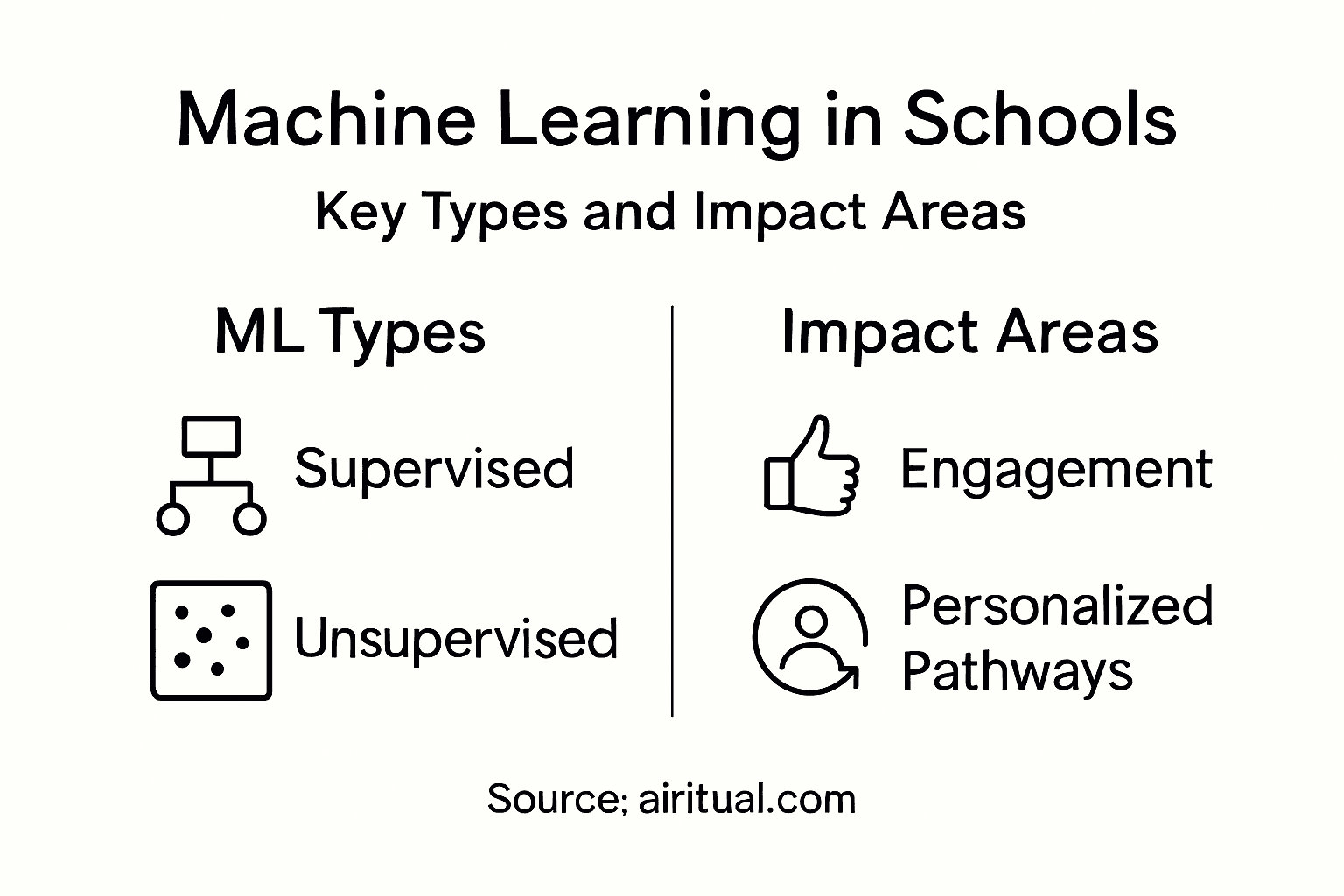
Here’s a side-by-side comparison of the main machine learning approaches used in schools:
| Approach | How It Works | Ideal Educational Use |
|---|---|---|
| Supervised Learning | Trains models with labeled data | Predict student outcomes and performance |
| Unsupervised Learning | Finds patterns in unlabeled datasets | Discover new groups or learning behaviors |
| Reinforcement Learning | Learns via continuous feedback and interaction | Enables adaptive and personalized learning |
Reinforcement learning represents the most dynamic machine learning approach, creating adaptive systems that continuously improve based on interaction and feedback.
Reinforcement Learning introduces an innovative dimension to educational technology. These adaptive systems learn and optimize strategies through continuous interaction, allowing for:
- Dynamic curriculum adjustments
- Personalized learning pathway generation
- Real-time performance feedback
- Intelligent tutoring system development
Pro tip: Start experimenting with machine learning techniques by selecting a specific, narrow educational challenge where data is readily available and outcomes can be clearly measured.
How Machine Learning Improves Student Engagement
Student engagement represents a complex, multidimensional challenge that machine learning is uniquely positioned to address. Advanced engagement detection techniques enable educators to understand and enhance student involvement through sophisticated data analysis and real-time insights.
Behavioral Engagement is the first critical dimension machine learning can transform. By analyzing interaction patterns, attendance records, and participation metrics, ML algorithms can:
- Identify early signs of disengagement
- Track student involvement across different learning activities
- Predict potential dropout risks
- Generate personalized intervention strategies
Emotional engagement represents another crucial area where machine learning provides unprecedented insights. These sophisticated algorithms can interpret subtle signals from classroom interactions, learning management system data, and even physiological responses to understand students’ psychological states and motivation levels.
Machine learning transforms student engagement from a subjective perception to an objectively measurable, actionable scientific process.
Cognitive engagement receives particular attention through machine learning techniques. These advanced systems help educators understand how deeply students are processing information by analyzing:
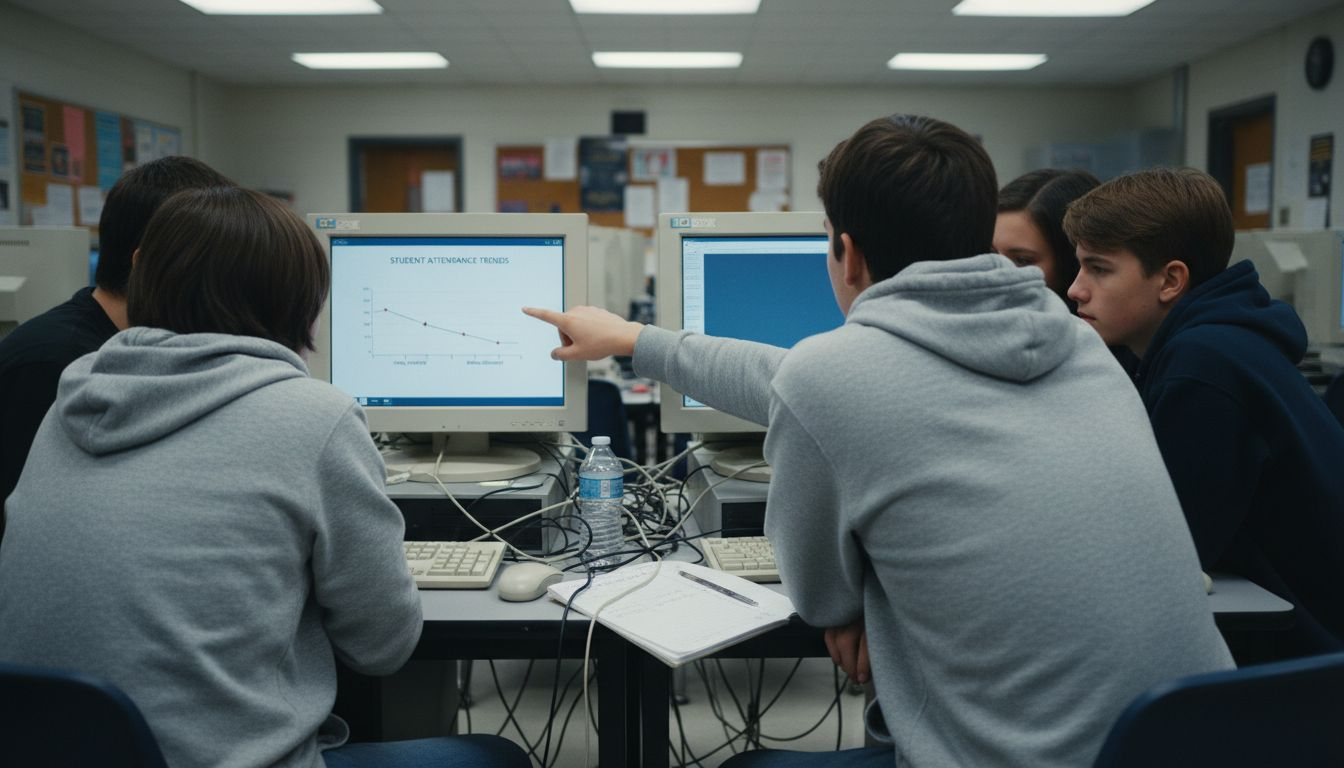
This summary highlights how machine learning enhances each dimension of student engagement:
| Engagement Type | Machine Learning Impact | Measurement Example |
|---|---|---|
| Behavioral | Detects disengagement patterns | Participation metrics |
| Emotional | Reveals motivation changes | Sentiment from interactions |
| Cognitive | Assesses depth of learning | Complex task completion time |
- Time spent on complex learning tasks
- Quality of submitted assignments
- Critical thinking demonstration
- Depth of conceptual understanding
Pro tip: Implement machine learning engagement tracking incrementally, starting with one specific class or learning module to build confidence and understand system capabilities.
Real-World Applications and Success Stories
Machine learning applications in education demonstrate remarkable potential for transforming learning environments through data-driven strategies. These real-world success stories showcase the profound impact of intelligent technologies across diverse educational contexts.
Dropout Prevention represents a critical application where machine learning delivers tangible results. Educational institutions have successfully implemented predictive algorithms to identify students at risk of leaving their academic programs. Key strategies include:
- Early warning systems tracking student engagement
- Personalized intervention recommendations
- Comprehensive risk factor analysis
- Targeted support program development
Intelligent tutoring systems have revolutionized personalized learning experiences. These adaptive platforms use sophisticated algorithms to customize educational content, pace, and difficulty levels based on individual student performance and learning styles.
Machine learning transforms educational challenges from subjective guesswork into precise, actionable insights.
Successful machine learning implementations have demonstrated significant performance improvements across different educational settings:
- US university retention rates increased by 25%
- UK primary schools boosted standardized test scores by 30%
- Online learning platforms improved course completion rates by 40%
- Adaptive learning systems enhanced student engagement metrics
Pro tip: Start small by piloting machine learning solutions in one specific academic department to build institutional confidence and gather measurable implementation data.
Risks, Ethics, and Equity Concerns
Ethical considerations in machine learning represent critical challenges that demand comprehensive and thoughtful approaches to technological implementation in educational settings. The rapid advancement of artificial intelligence necessitates robust frameworks for ensuring responsible and equitable technological deployment.
Algorithmic Bias emerges as a primary ethical concern in machine learning applications. These systemic challenges can perpetuate existing social inequities by potentially discriminating against marginalized student populations. Key areas of potential bias include:
- Student performance prediction algorithms
- Recommendation systems for academic opportunities
- Automated assessment and grading mechanisms
- Personalized learning pathway generation
Privacy and data protection represent another significant ethical dimension. Machine learning systems collect extensive personal student information, raising critical questions about data sovereignty, consent, and potential misuse of sensitive educational records.
Ethical AI in education must prioritize transparency, accountability, and human-centered design principles.
Equity concerns extend beyond algorithmic limitations, addressing broader systemic challenges in technological access and implementation:
- Digital infrastructure disparities
- Socioeconomic barriers to technology access
- Cultural representation in machine learning models
- Linguistic diversity in educational AI
Pro tip: Develop a comprehensive ethical review process that includes diverse stakeholders and regularly audits machine learning systems for potential biases and equity challenges.
Best Practices for Integrating Machine Learning
Comprehensive AI integration frameworks demand strategic approaches that balance technological innovation with educational effectiveness. Successful machine learning implementation requires careful planning, stakeholder engagement, and a holistic understanding of institutional needs.
Institutional Readiness represents the foundational step in machine learning integration. Educational leaders must assess their technological infrastructure, data management capabilities, and organizational culture. Key preparatory steps include:
- Conducting comprehensive technological capability assessments
- Identifying clear educational improvement objectives
- Evaluating existing data collection and management systems
- Developing robust technology infrastructure
Stakeholder engagement emerges as a critical component of successful machine learning adoption. This involves creating collaborative frameworks that include perspectives from educators, administrators, students, and technical support teams.
Machine learning integration is not about replacing human expertise, but augmenting and empowering educational professionals.
Implementation strategies require a systematic and phased approach:
- Start with pilot programs in specific departments
- Develop comprehensive training programs for educators
- Create transparent evaluation and feedback mechanisms
- Continuously monitor and adjust implementation strategies
Pro tip: Begin machine learning integration by selecting a narrow, well-defined educational challenge where measurable outcomes can be clearly demonstrated.
Unlock the Full Potential of Machine Learning in Education
Machine learning offers powerful tools to predict student outcomes and personalize learning pathways but many educational institutions struggle to implement these complex technologies effectively. Challenges like data management, ethical considerations, and creating adaptive learning environments can feel overwhelming. If you want to transform these challenges into opportunities for enhanced student engagement and measurable success, strategic support is essential.
At airitual.com, we specialize in tailored AI-powered solutions designed specifically for education. Our expert team guides you through integrating advanced supervised, unsupervised, and reinforcement learning techniques, building ethical frameworks, and deploying adaptive systems that truly elevate individual learning experiences. Explore how our Classes | Artificial Intelligence programs enable educators and administrators to harness AI effectively. Ready to move beyond theory and achieve tangible results in your educational institution Discover the possibilities and schedule your free strategy session today to start transforming student outcomes with machine learning. Visit airitual.com to learn more and take the first step toward intelligent education innovation.
Frequently Asked Questions
What is machine learning in education?
Machine learning in education refers to the use of intelligent systems and algorithms that analyze data to improve educational outcomes, personalize learning experiences, and enhance student engagement without being explicitly programmed.
How does supervised learning work in educational contexts?
Supervised learning in education involves training predictive models using labeled data to make accurate predictions about student performance and outcomes, helping educators tailor instruction to individual needs.
What are the benefits of using machine learning for student engagement?
Machine learning can track and analyze student participation, predict disengagement, and provide personalized intervention strategies, allowing educators to enhance student involvement and overall learning experiences.
What ethical considerations are important in implementing machine learning in schools?
Ethical considerations include addressing algorithmic bias, ensuring data privacy and protection, and promoting equity in technology access, which are crucial to responsibly deploying machine learning in educational settings.
Recommended
- How to Personalize Learning With AI for Student Success | Artificial Intelligence
- Defining AI-Powered Tools: Impact on Education Outcomes | Artificial Intelligence
- How to Implement AI in Education for Enhanced Results | Artificial Intelligence
- 7 Key Types of AI Strategies for Educational Success | Artificial Intelligence
Recent Comments