
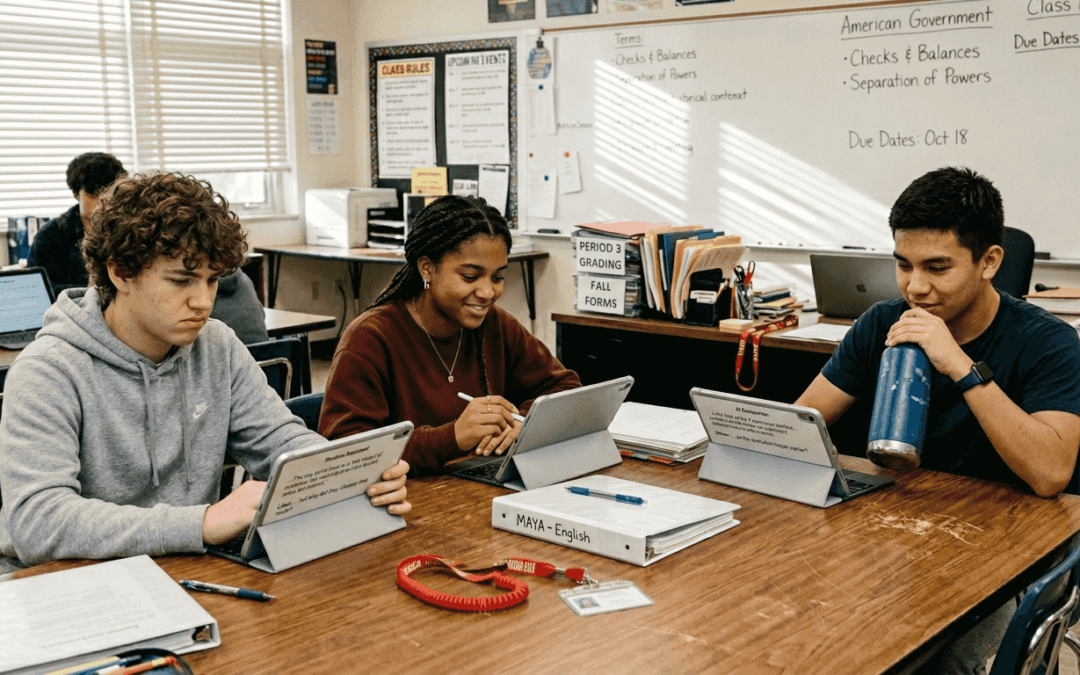
Many educators still view chatbots as simple automated responders that handle basic questions. This perception misses their sophisticated AI capabilities that now deliver personalized tutoring, boost student motivation, and automate time-consuming administrative tasks. Modern educational chatbots use advanced natural language processing and machine learning to adapt to individual learning styles, provide instant feedback, and free teachers to focus on high-value instruction. You’ll discover how these tools enhance engagement, support diverse learners, and streamline operations while learning practical strategies to overcome adoption challenges and maximize their impact in your institution.
Table of Contents
- Understanding The Technology Behind Educational Chatbots
- How Chatbots Enhance Personalized Learning And Student Engagement
- Streamlining Administrative Tasks With Chatbots In Education
- Challenges And Best Practices For Integrating Chatbots In Education
- Explore AI Tools And Training For Education
- What Is The Role Of Chatbots In Education?
Key takeaways
| Point | Details |
|---|---|
| Personalized learning support | Chatbots adapt explanations and exercises to individual student needs in real time |
| Administrative automation | They handle scheduling, FAQs, grading assistance, and communication tasks efficiently |
| Enhanced engagement | Integration with active teaching methods significantly boosts student motivation and participation |
| Implementation challenges | Success requires addressing teacher training gaps, privacy concerns, and potential AI biases |
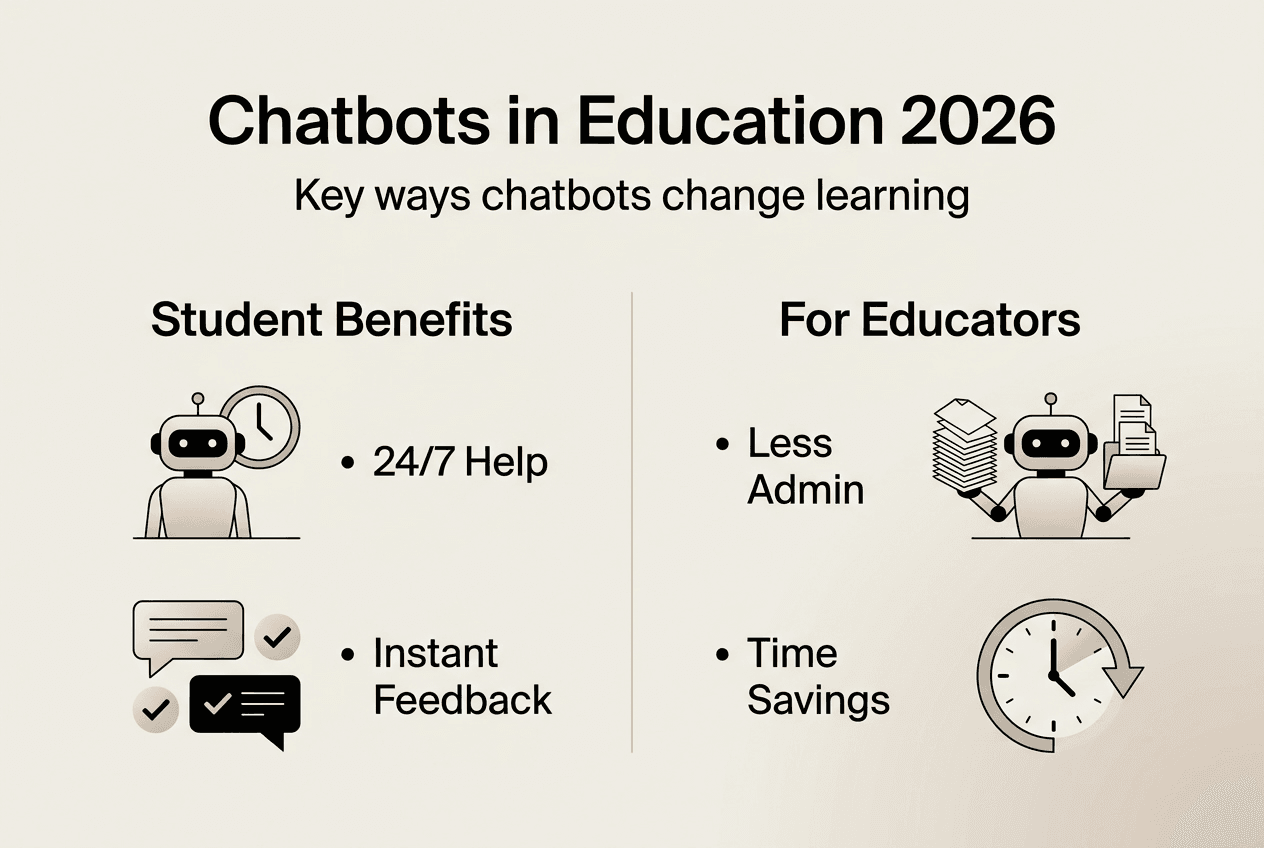
| 24/7 accessibility | Students benefit from immediate, intuitive assistance beyond traditional classroom hours |
Understanding the technology behind educational chatbots
Educational chatbots rely on sophisticated artificial intelligence technologies that enable them to understand, process, and respond to student queries naturally. At their core, AI chatbots consist of NLP Engine, Intent Recognition, Dialogue Management, ML Models, Backend Integration, and Response Generator working together seamlessly. These components create dynamic conversations that feel human while maintaining consistency across thousands of interactions.
Natural language processing forms the foundation, allowing chatbots to interpret student questions regardless of phrasing variations. Machine learning algorithms continuously improve response accuracy by analyzing past interactions and identifying patterns in how students communicate. Deep learning models, particularly transformer-based architectures, enable chatbots to grasp context and nuance that earlier systems missed entirely.
Modern educational chatbots leverage powerful natural language understanding models including BERT, GPT, and IBM Watson to personalize learning with AI. These technologies process student inputs to determine intent, retrieve relevant information from knowledge bases, and generate appropriate responses. The dialogue management system maintains conversation flow, remembers previous exchanges, and guides students toward learning objectives without losing context.
Core chatbot components:
- NLP Engine processes and interprets natural language inputs
- Intent Recognition identifies what students actually need
- Dialogue Management maintains coherent conversation flow
- Machine Learning Models improve accuracy through continuous training
- Backend Integration connects to learning management systems and databases
- Response Generator creates natural, contextually appropriate answers
The integration of these technologies creates chatbots capable of handling complex educational scenarios. They can explain difficult concepts multiple ways, adjust difficulty based on student performance, and provide scaffolded support that matches individual learning pace. This technological foundation enables the personalized, responsive learning experiences that distinguish modern chatbots from simple scripted responders.
| Technology Component | Primary Function | Educational Benefit |
|---|---|---|
| Natural Language Processing | Understands student questions | Enables natural conversation |
| Machine Learning | Improves through experience | Increases accuracy over time |
| Deep Learning Models | Grasps context and nuance | Provides relevant, personalized responses |
| Intent Recognition | Identifies student needs | Delivers targeted assistance |
| Dialogue Management | Maintains conversation flow | Creates coherent learning experiences |
Pro Tip: Understanding these large language models and their capabilities helps you evaluate chatbot solutions more effectively and set realistic expectations for implementation in your institution.
How chatbots enhance personalized learning and student engagement
Chatbots deliver individualized educational support by adapting to each student’s unique learning style, pace, and knowledge level. Research shows that AI chatbot technology positively influences academic achievement, motivation, self-efficacy, and student engagement across diverse educational settings. These tools analyze student responses in real time, identifying knowledge gaps and adjusting explanations to match comprehension levels.
Immediate feedback represents one of chatbots’ most powerful engagement drivers. Students receive instant corrections, hints, and encouragement without waiting for teacher availability. This responsiveness keeps learners actively involved, reduces frustration, and builds confidence through small, incremental successes. Chatbots can generate unlimited practice exercises tailored to specific weaknesses, providing the repetition some students need without boring others.

The combination of chatbot technology with active teaching methodologies creates particularly strong results. Studies demonstrate that chatbots integrated with active methodologies enhance personalization, self-regulation, and educational efficiency when implemented thoughtfully. Teachers who use chatbots to handle routine explanations and practice gain time for collaborative projects, discussions, and creative problem solving that require human facilitation.
Ways chatbots boost student engagement:
- Provide instant feedback on assignments and practice problems
- Adapt difficulty levels automatically based on performance
- Offer multiple explanation styles for different learning preferences
- Maintain patient, judgment-free interaction environments
- Track progress and celebrate achievements to build motivation
- Connect new concepts to students’ existing knowledge
Round-the-clock availability transforms learning opportunities beyond traditional school hours. Students access help with homework, test preparation, or concept review whenever they need it, not just during class time. This flexibility particularly benefits students with demanding schedules, those who need extra processing time, or learners who feel more comfortable asking questions privately.
The intuitive interfaces of modern chatbots lower barriers to seeking help. Students who might hesitate to raise hands in class often engage freely with chatbots, asking clarifying questions without fear of judgment. This psychological safety encourages exploration, risk-taking, and the productive struggle essential for deep learning.
Pro Tip: Combine chatbot assistance with teacher-led discussion and collaborative activities to maximize both personalized learning with AI and social-emotional development, creating a balanced approach that leverages technology’s strengths while preserving essential human connection.
Implementing AI strategies for educational success requires thoughtful integration that complements rather than replaces quality instruction. The most effective implementations use chatbots to handle repetitive tasks and basic concept reinforcement, freeing teachers to focus on higher-order thinking skills, creativity, and relationship building that technology cannot replicate.
Streamlining administrative tasks with chatbots in education
Administrative workload consumes significant educator time that could otherwise support direct student instruction and relationship building. Chatbots efficiently automate routine tasks by handling scheduling, FAQs, grading assistance, and communication that traditionally require manual processing. These systems answer common questions from students and parents instantly, eliminating repetitive email exchanges and phone calls.
Scheduling represents a major time drain that chatbots handle exceptionally well. They coordinate meeting times, send automated reminders for assignments and events, and manage calendar conflicts without human intervention. This automation ensures students and families receive timely information while reducing the coordination burden on teachers and administrators.
Grading support through chatbots provides preliminary assessments for objective assignments, flagging areas requiring human review. While chatbots cannot replace teacher judgment for complex work, they handle multiple-choice questions, basic calculations, and pattern matching efficiently. This assistance accelerates feedback delivery and helps educators identify struggling students earlier.
Top administrative tasks chatbots automate:
- Scheduling meetings, events, and sending deadline reminders
- Answering frequently asked questions about policies and procedures
- Tracking attendance and sending absence notifications
- Providing grading support for objective assessments
- Managing parent-teacher communication and updates
The time savings from automation accumulate quickly across an institution. Teachers reclaim hours previously spent on repetitive communication, allowing them to implement AI in education more strategically through lesson planning, differentiated instruction, and professional development. Administrative staff redirect effort from routine queries to complex problem solving and strategic initiatives.
| Administrative Task | Manual Handling Time | Chatbot Handling Time | Time Saved |
|---|---|---|---|
| Answering 50 FAQ emails | 3 hours | 5 minutes | 2 hours 55 minutes |
| Scheduling 20 parent meetings | 2 hours | 15 minutes | 1 hour 45 minutes |
| Sending assignment reminders | 45 minutes | 2 minutes | 43 minutes |
| Basic grading (100 submissions) | 4 hours | 30 minutes | 3 hours 30 minutes |
| Attendance tracking (daily) | 30 minutes | 5 minutes | 25 minutes |
Communication management improves dramatically when chatbots handle initial inquiries and route complex issues to appropriate staff members. Parents receive immediate responses to basic questions about school policies, upcoming events, or general procedures. This responsiveness builds satisfaction while ensuring educators only engage with questions requiring their expertise.
Using an AI education checklist helps institutions identify which administrative tasks offer the highest automation potential. Starting with high-volume, low-complexity activities builds confidence and demonstrates value before tackling more sophisticated applications. This incremental approach allows staff to adapt gradually while experiencing tangible benefits early in the implementation process.
Challenges and best practices for integrating chatbots in education
Successful chatbot integration faces several obstacles that require proactive planning and ongoing attention. Research identifies that teacher resistance and limited AI training, along with privacy concerns, create significant barriers to effective adoption. Educators who lack confidence in AI technologies may resist implementation or use tools superficially, limiting potential benefits.
Teacher skepticism often stems from valid concerns about technology replacing human roles or creating additional workload during transition periods. Some educators worry that chatbots might provide incorrect information, reinforce misconceptions, or fail to recognize when students need human intervention. Addressing these concerns requires transparent communication about chatbot capabilities, limitations, and the complementary role they play alongside quality teaching.
Training gaps prevent many educators from maximizing chatbot effectiveness. Without understanding how these tools work, when to deploy them, and how to interpret their data, teachers struggle to integrate chatbots meaningfully into instruction. Comprehensive professional development must cover both technical operation and pedagogical applications to build genuine competence and confidence.
Privacy and data security concerns demand careful attention in educational settings. Chatbots collect significant information about student interactions, learning patterns, and personal details that require protection under various regulations. Institutions must implement robust data governance, obtain appropriate permissions, and maintain transparency about information collection and usage.
Biases embedded in chatbot training data or algorithms can perpetuate stereotypes or provide inequitable support to different student groups. Ongoing monitoring ensures chatbots deliver fair, accurate assistance across diverse populations. Regular audits of chatbot responses, coupled with diverse testing groups, help identify and correct problematic patterns before they affect large numbers of students.
Best practices for successful chatbot integration:
- Provide comprehensive teacher training covering both technical skills and pedagogical applications
- Engage stakeholders early through pilots and feedback sessions
- Implement transparent data collection and privacy policies with clear opt-out options
- Continuously evaluate chatbot performance through user feedback and learning outcome analysis
- Monitor for biases and inaccuracies through regular response audits
- Start small with low-risk applications before expanding to critical functions
- Maintain human oversight and clear escalation paths for complex issues
Teacher resistance and limited training in AI tools are major pedagogical barriers.
Building institutional support requires demonstrating value through measurable outcomes. Track metrics like time saved, student engagement increases, or learning gains to build evidence for continued investment. Share success stories and concrete examples that help skeptical stakeholders envision practical applications in their contexts.
Providing awareness training helps entire school communities understand AI capabilities and limitations realistically. When administrators, teachers, students, and parents share common knowledge about chatbot functions, implementation proceeds more smoothly with fewer misunderstandings or unrealistic expectations.
Following an AI adoption guide that addresses technical, pedagogical, and organizational dimensions increases implementation success. The most effective approaches balance innovation with careful risk management, ensuring technology serves educational goals rather than driving them. Regular reflection and adjustment based on actual usage patterns keeps implementations aligned with evolving needs.
Explore AI tools and training for education
Navigating the expanding landscape of educational AI tools requires expert guidance and strategic planning. Our educational AI adoption guide provides step-by-step frameworks for evaluating chatbot solutions, planning implementations, and measuring success in your specific institutional context. You’ll gain clarity on which tools match your needs and how to deploy them effectively.
Overcoming resistance and building genuine competence across your staff starts with quality awareness training that addresses concerns while building skills. We help educators understand AI capabilities realistically, identify high-value applications, and develop confidence using these tools to enhance rather than replace their expertise.
Access curated AI in education resources covering chatbots, personalized learning platforms, and administrative automation tools. Our consultative approach ensures you select solutions aligned with your goals, budget, and technical capacity while avoiding common implementation pitfalls.
Pro Tip: Start with small pilot programs using recommended tools to build evidence and refine your approach before scaling institution-wide, reducing risk while accelerating learning.
What is the role of chatbots in education?
Chatbots serve multiple critical functions in modern educational settings, from personalized tutoring and student engagement to administrative task automation. They provide instant answers to common questions, deliver customized learning support, and handle routine communication that previously consumed significant educator time. Research confirms these tools positively impact academic achievement, motivation, and engagement when implemented thoughtfully alongside quality teaching.
Successful integration requires careful consideration of technology selection, privacy protections, and comprehensive teacher training. Institutions must evaluate chatbot capabilities against specific needs, ensure robust data governance, and build staff competence in both technical operation and pedagogical application. Starting with pilot programs allows schools to refine approaches before scaling, reducing risk while building institutional knowledge.
Student response to well-designed chatbots tends to be highly positive due to their accessibility, patience, and personalized support. The 24/7 availability and judgment-free interaction environment encourage students to seek help more frequently, ask clarifying questions without embarrassment, and engage in productive practice. These benefits complement rather than replace human instruction, creating blended learning environments that leverage both technological and human strengths. Learn more about effective implementation strategies and use an AI education checklist to guide your selection process.
How do chatbots personalize learning for students?
Chatbots analyze student inputs using NLP, ML, and deep learning to adapt explanations, exercises, and feedback to individual needs. They track performance patterns, identify knowledge gaps, and adjust difficulty levels automatically without requiring manual intervention. This real-time responsiveness ensures each student receives support matched to their current understanding and learning pace, creating truly individualized educational experiences that would be impossible for teachers to deliver manually at scale. Explore comprehensive approaches to personalize learning with AI in your institution.
What challenges should educators expect when adopting chatbots?
Educators commonly face technology training gaps and initial skepticism when introducing chatbot systems. Many teachers lack confidence in AI tools and worry about accuracy, appropriateness, or their own ability to use these systems effectively. Teacher resistance and limited AI training, along with privacy concerns, represent the most significant adoption barriers. Additionally, ensuring robust data privacy protections and actively monitoring for AI biases requires ongoing institutional commitment and resources. Comprehensive awareness training addresses these challenges by building genuine competence and realistic expectations across your staff.
How do students benefit from chatbot accessibility?
Immediate assistance available 24/7 extends learning support far beyond traditional classroom hours, helping students with homework, test preparation, and concept review whenever they need it. This constant availability particularly benefits students with demanding schedules, those requiring extra processing time, or learners who prefer private interaction over public questioning. Research shows that students appreciate 24/7 accessibility and intuitive interfaces because these features remove barriers to seeking help and encourage more frequent engagement with learning materials. The judgment-free environment chatbots provide increases question-asking behavior and productive practice, leading to improved understanding and retention.
Recent Comments