

Schools eager to adopt AI often face a crossroad between ambition and readiness. Successful implementation goes beyond choosing the latest tool; it requires a clear-eyed look at your technology capacity, staff skills, and institutional goals. By emphasizing a thorough readiness assessment and building a foundation for ethical, goal-driven adoption, educational leaders can position their institutions to maximize AI’s value while avoiding common setbacks.
Table of Contents
- Step 1: Assess Readiness And Define Objectives
- Step 2: Select Suitable AI Solutions And Partners
- Step 3: Implement AI Tools With Staff Training
- Step 4: Evaluate Impact And Optimize Usage
Quick Summary
| Key Insight | Explanation |
|---|---|
| 1. Assess Technology Infrastructure | Ensure your internet and devices can support AI tools effectively before adoption. |
| 2. Prioritize Staff Training | Professional development should focus on the pedagogy of AI integration, not just technical skills. |
| 3. Set Clear Institutional Objectives | Define specific goals to align AI implementation with educational outcomes. |
| 4. Evaluate Ethical Readiness | Address data privacy and algorithmic bias before adopting AI to ensure equitable access. |
| 5. Measure and Optimize Impact | Establish baseline metrics to evaluate the success and equity of AI integration continuously. |
Step 1: Assess Readiness and Define Objectives
Before implementing AI in your school or district, you need to understand where you stand and where you want to go. This step involves honestly evaluating your current capabilities and establishing clear goals that align with your educational mission.
Start by examining your technology infrastructure. Do you have reliable internet connectivity across all classrooms? Are your devices and networks capable of supporting AI tools? Check your data management systems, security protocols, and storage capacity. Schools often discover gaps here that need addressing before moving forward.
Next, assess your staff readiness and capabilities. Teaching and administrative staff need more than technical skills. According to research on pedagogical AI integration, educators require professional development focused on how AI changes teaching and learning, not just how to operate tools. Consider:
- Current comfort level with technology across departments
- Existing digital literacy among teachers and administrators
- Staff attitudes toward AI and change management
- Available time and resources for professional development
Define your institutional objectives clearly. What specific problems are you solving? Are you aiming to improve personalized learning, reduce administrative burden, enhance student engagement, or support struggling learners? Your goals should connect directly to teaching and learning outcomes.
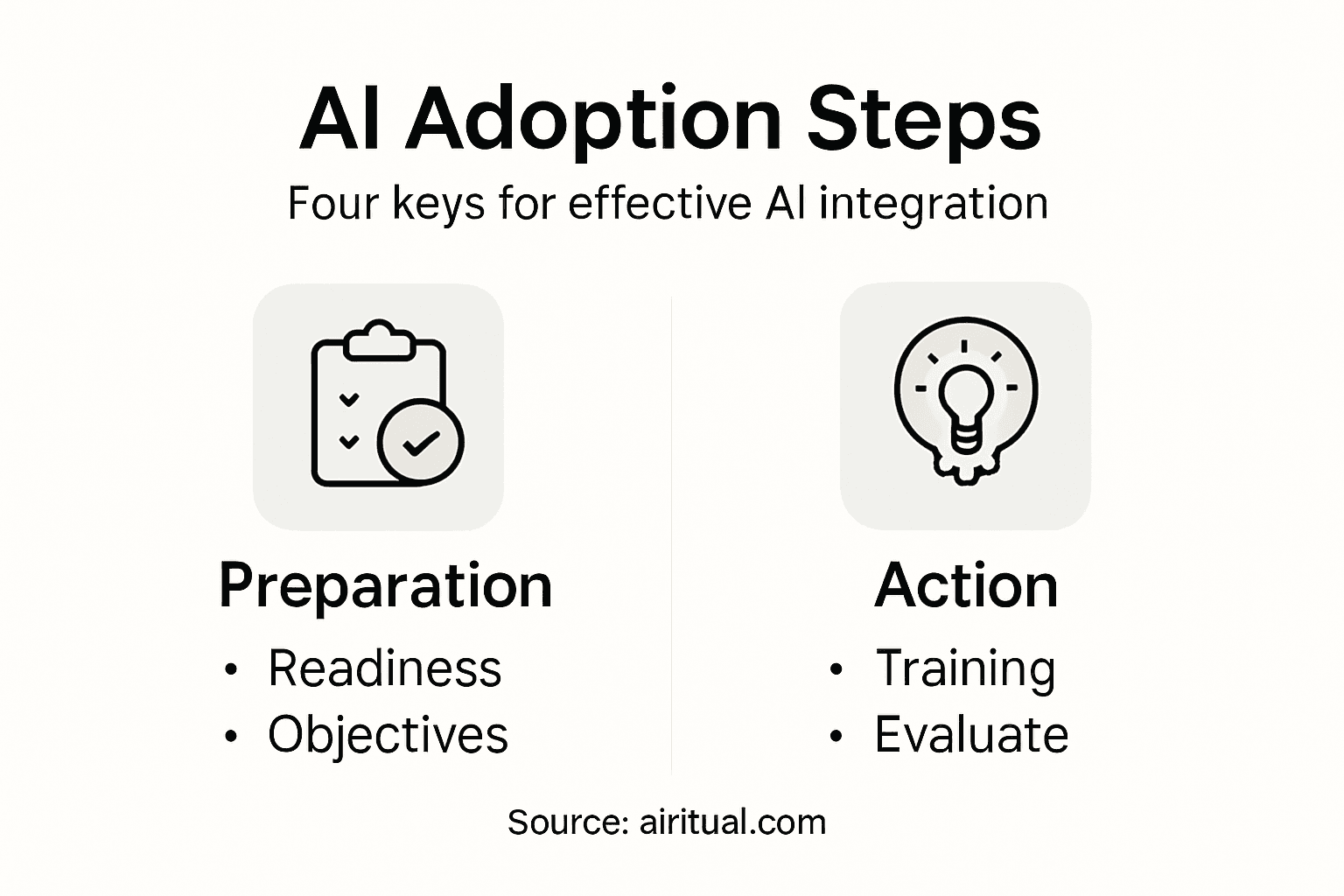
Addionally, examine your ethical readiness. The U.S. Department of Education emphasizes that institutions must address data privacy, algorithmic bias, and equitable access before adoption. Ask yourself: How will you protect student data? What safeguards prevent AI from perpetuating educational inequities?
Create a readiness scorecard that ranks your institution across these areas. Be honest about weaknesses, not just strengths. This assessment becomes your baseline for what needs attention before full implementation.
Here’s a summary of readiness areas to review before implementing AI:
| Readiness Area | What to Evaluate | Common Challenges Encountered |
|---|---|---|
| Technology Infrastructure | Network reliability, device compatibility | Aging hardware, limited bandwidth |
| Staff Preparedness | Digital literacy, openness to change | Varied tech comfort, lack of training |
| Institutional Objectives | Alignment with mission, measurable outcomes | Vague goals, unclear success metrics |
| Ethical Readiness | Data privacy, algorithmic fairness | Weak safeguards, unclear protocols |
Your readiness assessment reveals not just what you can do with AI, but what needs strengthening first to ensure successful, ethical adoption.
Pro tip: Document your current state with specific metrics, not vague observations, so you can measure progress and identify which barriers require immediate attention before moving to implementation.
Step 2: Select Suitable AI Solutions and Partners
Now that you understand your institution’s readiness level and goals, it’s time to identify AI solutions and partners that align with your specific needs. This step requires careful evaluation to ensure you choose tools and collaborators that support your educational mission ethically and effectively.
Start by clarifying what problems your chosen AI solution must solve. Are you addressing personalized learning gaps, automating administrative tasks, or improving student engagement? Your solution should map directly to the objectives you defined in Step 1. Avoid selecting tools simply because they’re trendy or competitors are using them.
When evaluating AI solutions, prioritize ethical standards and data privacy. UNESCO guidance recommends selecting tools aligned with ethical frameworks that protect student information and maintain transparency in how algorithms work. Ask potential vendors about their data handling practices, security certifications, and compliance with regulations like FERPA or GDPR.
Consider these evaluation criteria:
- Alignment with your pedagogical approach and learning outcomes
- User interface and ease of adoption for teachers and students
- Vendor track record and customer support quality
- Cost structure and total cost of ownership
- Integration capability with your existing systems
- Transparency about how the AI makes decisions
Partner selection matters equally. Look for vendors who understand education, not just technology companies entering the sector. Credible organizations demonstrate deep knowledge of classroom challenges, teacher workflows, and student needs. They should be willing to engage in professional development and ongoing support.
Conduct demos and pilot programs before committing institution-wide. Request references from similar schools or districts. Ask about their approach to ongoing training, which research shows is critical for successful AI integration across your staff.
Selecting an AI partner is like choosing a colleague for your institution, not just purchasing software. The relationship matters as much as the tool.
Pro tip: Create a weighted scorecard listing your must-haves, nice-to-haves, and deal-breakers before approaching vendors, so your evaluation stays objective and aligned with your actual needs rather than marketing promises.
Step 3: Implement AI Tools with Staff Training
Successful AI implementation depends far more on your people than on the technology itself. This step focuses on launching your AI tools while simultaneously building educator competency and confidence through structured professional development.
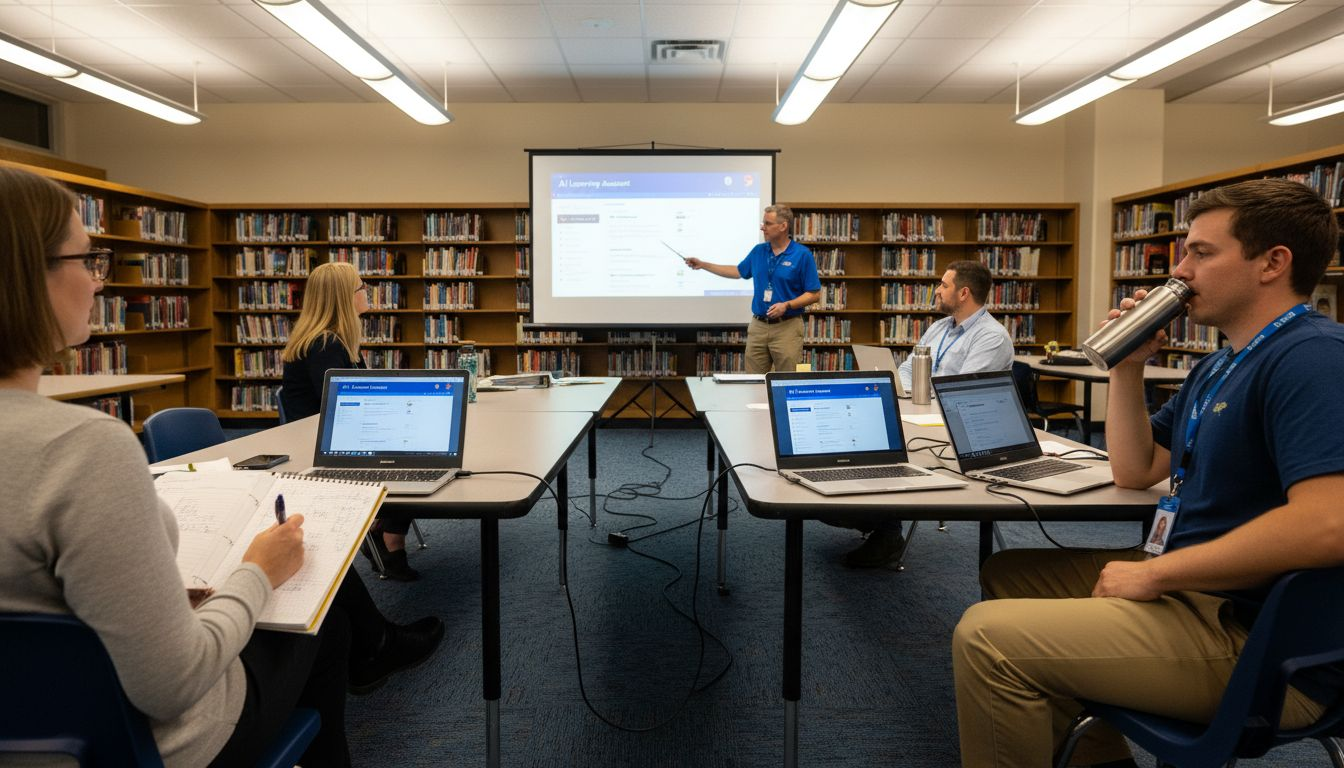
Begin with pilot programs rather than institution-wide rollouts. Select a group of early-adopter teachers and administrators to work with the new AI tools first. This creates a safe space for experimentation and generates real-world feedback before expanding to all staff. Pilots typically run 4 to 8 weeks and reveal practical challenges you cannot predict from planning alone.
During your pilot phase, establish dedicated professional development time. Teachers need more than a quick tutorial on using software. According to Harvard research, educators must understand AI pedagogically and technically to guide students responsibly through AI-enhanced learning. Professional development should address how AI changes instruction methods, not just button-clicking.
Your training program should include:
- Technical skills for operating AI tools and troubleshooting basic issues
- Pedagogical approaches for integrating AI into curriculum design
- Ethical considerations around bias, privacy, and responsible AI use
- Collaborative learning exercises where teachers practice with AI together
- Ongoing support channels and peer mentoring structures
Designate AI champions from your teaching staff who complete advanced training first. These educators become peer mentors for colleagues, making the transition feel less intimidating and more collegial. They understand classroom realities in ways external trainers cannot.
Document what works and what doesn’t during your pilot. Gather feedback regularly from participating teachers. Their input shapes refinements before broader implementation. Celebrate early wins publicly to build momentum and demonstrate tangible value.
Professional development is not a checkbox event; it’s the foundation that determines whether your AI investment succeeds or stalls.
Pro tip: Schedule training during actual planning periods or professional development days rather than adding it to already-full teacher schedules; educators are far more likely to engage deeply when implementation time is protected and valued.
Step 4: Evaluate Impact and Optimize Usage
You’ve launched your AI tools and trained your staff. Now comes the critical work of measuring what’s actually happening and refining your approach based on real evidence. This step ensures your AI investment delivers measurable value and informs continuous improvement.
Start by establishing baseline metrics before broad implementation. What does success look like for your institution? Success metrics differ by context. A K-12 school might track student engagement, personalized learning gains, or teacher time savings. A university might measure course completion rates, writing quality improvements, or administrative efficiency gains.
Design your evaluation around three dimensions. First, assess learning outcomes by examining student performance data, engagement levels, and feedback. Second, evaluate equity implications to ensure AI benefits all students equally and doesn’t widen achievement gaps. Third, monitor operational efficiency through metrics like time spent on administrative tasks or grading.
Below is a comparison of key AI implementation metrics for tracking progress and impact:
| Metric Type | Example Metrics | Why It Matters |
|---|---|---|
| Learning Outcomes | Student engagement, test scores | Measures educational impact |
| Equity Implications | Achievement gap trends, access rates | Ensures fair benefits for all |
| Operational Efficiency | Teacher time savings, reduced admin workload | Demonstrates practical value |
Collect data consistently using multiple methods:
- Quantitative metrics from your AI tools and learning management systems
- Student surveys and feedback about their AI learning experiences
- Teacher observations and qualitative feedback from classroom use
- Equity audits examining outcomes across demographic groups
- Cost tracking to understand return on investment
According to research, continuous feedback and data collection enable optimization of AI tool usage while ensuring alignment with educational outcomes. Regular evaluation reveals what’s working and what needs adjustment.
Schedule quarterly review meetings with your AI champions, administrators, and key teachers. Analyze your data together. Ask hard questions. Are struggling students actually getting more support? Has teacher workload decreased meaningfully? Are results equitable across all student populations? Use findings to make iterative refinements to your approach.
Be prepared to adjust tools, training, or implementation strategies based on evidence. What worked in your pilot might need modification at scale. Flexibility and responsiveness to data distinguish successful implementations from stalled ones.
Evaluation is not about proving AI works; it’s about understanding how to make AI work better for your specific students and teachers.
Pro tip: Create a simple monthly data dashboard that teachers can access showing how their classroom AI usage correlates with student outcomes, making the impact visible and actionable rather than abstract.
Unlock the Full Potential of AI in Your Educational Institution
Integrating AI into education comes with challenges like assessing readiness, selecting ethical solutions, and ensuring staff are well-trained for a seamless transition. If you are striving to bridge these gaps while advancing your institution’s mission, understanding how to evaluate AI tools and measure impact is critical. This journey demands tailored support that goes beyond technology to include strategic planning, professional development, and continuous optimization.
At airitual.com, we specialize in partnering with educational organizations to deliver customized AI solutions designed to meet your unique goals with transparency and ethical rigor. Whether you need help assessing your current readiness, choosing the right AI tools aligned with your pedagogy, or implementing comprehensive staff training programs, our consultative approach ensures measurable results and lasting impact. Start transforming your classroom experience today by exploring how we help educators succeed with AI at airitual.com or learn more about our tailored AI-powered educational tools.
Ready to make AI adoption effective and ethical in your institution Reach out now for a free strategy session and take the first step toward smart, impactful AI integration that empowers students and teachers alike.
Frequently Asked Questions
How do I assess my school’s readiness for AI adoption?
To assess your school’s readiness for AI adoption, evaluate your technology infrastructure, staff preparedness, institutional objectives, and ethical considerations. Conduct a thorough review of current capabilities and gaps to create a readiness scorecard that highlights areas needing improvement.
What criteria should I use to select AI solutions for my educational institution?
Select AI solutions based on their alignment with your educational goals, ethical standards, and user-friendliness. Prioritize solutions that support pedagogical approaches and consider conducting demos or pilot programs to gauge effectiveness before full implementation.
How can I provide effective professional development for staff on AI integration?
Provide effective professional development by offering structured training that covers both technical skills and pedagogical approaches to using AI. Schedule training sessions during existing planning periods to ensure maximum participation and engagement among educators.
What metrics should I track to evaluate the impact of AI tools in classrooms?
Track metrics related to learning outcomes, equity implications, and operational efficiency. For example, monitor student engagement levels and teacher time savings regularly to assess the effectiveness and fairness of your AI tools.
How can I ensure equitable access to AI resources for all students?
Ensure equitable access to AI resources by regularly evaluating data to monitor disparities in student usage and outcomes. Create targeted support programs based on identified needs to help underserved student populations benefit from AI initiatives.
Recommended
- How to Implement AI in Education for Enhanced Results | Artificial Intelligence
- How to Personalize Learning With AI for Student Success | Artificial Intelligence
- How to Implement AI Workflows for Education Success | Artificial Intelligence
- 7 Key Types of AI Strategies for Educational Success | Artificial Intelligence
Recent Comments