
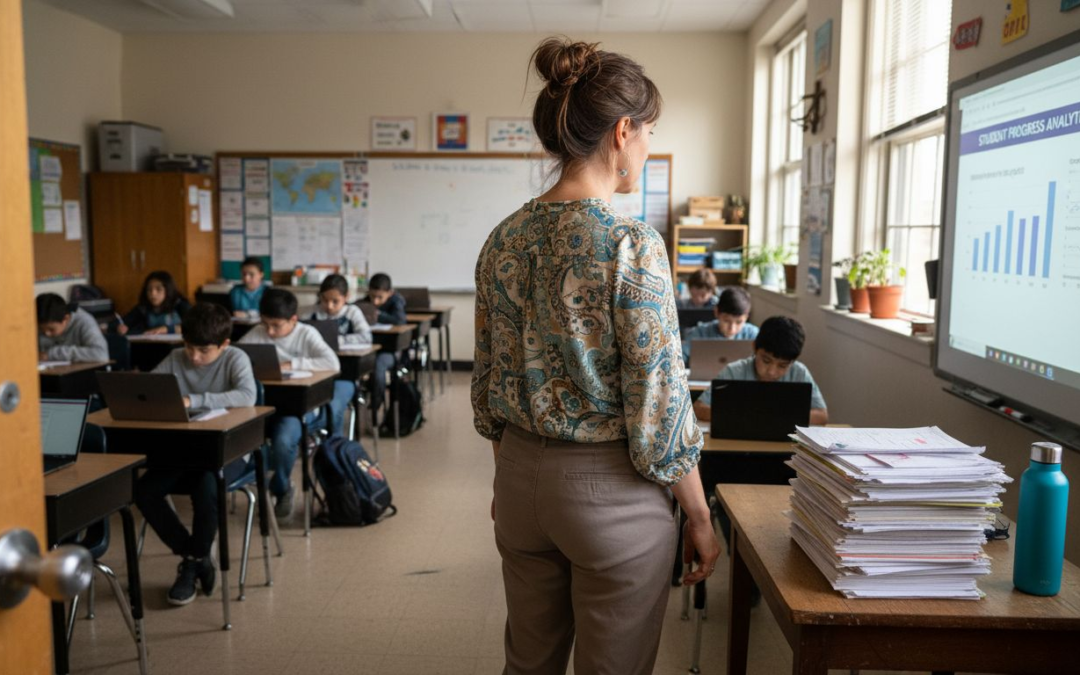
Managing complex academic schedules, tracking student performance, and personalizing instruction can quickly overwhelm any educational institution. The demands on administrators and educators continue to grow, leaving little time for strategic planning or individualized student support. You may wonder how to keep up and still deliver high-quality outcomes for your students and staff.
The good news is that artificial intelligence and data-driven tools are reshaping education. With the right technologies, you can automate routine tasks, make smarter decisions, and adapt learning experiences to fit every student’s needs. This list reveals actionable strategies and cutting-edge approaches that institutions like yours are already using to enhance operations, improve engagement, and predict student success.
Get ready to discover specific ways AI and analytics can empower your school, from automating grading to building a culture of innovation. Each insight will help you work smarter, focus on what matters most, and transform educational challenges into lasting improvements.
Table of Contents
- Data-Driven Decision Making For School Operations
- Personalized Learning Using Adaptive AI Tools
- Automating Administrative Tasks With AI Solutions
- Enhancing Student Engagement Through AI Chatbots
- Predictive Analytics For Early Student Intervention
- AI-Powered Assessment And Grading Systems
- Building A Culture Of AI Adoption Among Staff
Quick Summary
| Key Insight | Explanation |
|---|---|
| 1. Implement Data-Driven Strategies | Prioritize gathering and analyzing key data metrics to guide decision-making and enhance student success. |
| 2. Utilize Adaptive AI Tools | Adopt AI for personalization in education, addressing unique student needs and improving engagement and outcomes. |
| 3. Automate Administrative Tasks | Use AI to streamline administrative processes, allowing staff to focus on strategic student-centered activities. |
| 4. Integrate AI Chatbots | Deploy chatbots for 24/7 student support, enhancing communication and providing personalized academic assistance. |
| 5. Analyze Predictive Data | Employ predictive analytics to identify at-risk students early, enabling timely interventions to improve educational outcomes. |
1. Data-Driven Decision Making for School Operations
Data-driven decision making is transforming how educational institutions operate by leveraging advanced analytics to optimize administrative processes and student outcomes. Schools can now move beyond traditional guesswork and implement strategic approaches powered by intelligent data analysis.
Modern educational institutions are increasingly adopting AI-powered analytics tools to streamline complex administrative tasks and improve institutional performance. These sophisticated systems enable administrators to:
- Track student enrollment patterns with unprecedented accuracy
- Monitor academic performance in real-time
- Evaluate staff effectiveness through comprehensive metrics
- Predict potential student challenges before they escalate
Operational efficiency becomes significantly enhanced when data-driven strategies are implemented systematically. By analyzing historical and current institutional data, schools can make more informed decisions that directly impact student success and organizational productivity.
Effective data-driven strategies transform raw information into actionable insights that drive educational excellence.
Implementing these strategies requires a structured approach. Key steps include:
- Identify critical institutional metrics
- Select appropriate data collection technologies
- Train staff on data interpretation
- Develop responsive decision-making protocols
Research indicates that educational institutions utilizing comprehensive decision support systems can significantly improve their operational effectiveness. These systems help administrators understand complex institutional dynamics and make proactive strategic choices.
Pro tip: Start small by selecting 2-3 key performance indicators to track, then gradually expand your data-driven decision-making framework.
2. Personalized Learning Using Adaptive AI Tools
Adaptive AI tools are revolutionizing education by creating tailored learning experiences that respond dynamically to individual student needs. Personalized learning technologies are transforming traditional classroom approaches by delivering customized educational content and support.
AI-powered personalization goes far beyond simple content recommendation. These intelligent systems analyze multiple data points including:
- Student performance metrics
- Learning speed and comprehension levels
- Individual knowledge gaps
- Preferred learning styles
- Engagement patterns
Machine learning algorithms continuously adapt educational materials in real-time, ensuring that each student receives precisely targeted instruction. This approach helps address the critical challenge of providing individualized attention in increasingly large and diverse classroom environments.
Personalized learning represents the future of education where technology meets individual academic potential.
Implementing adaptive AI tools requires a strategic approach. Educators should:
- Select robust AI learning platforms
- Integrate comprehensive student data
- Train staff on AI tool interpretation
- Regularly assess system performance
Research demonstrates that AI-supported personalization can significantly improve student engagement and learning outcomes by addressing unique educational requirements.
Pro tip: Start with small-scale AI personalization pilots in specific subjects to build institutional confidence and understand implementation challenges.
3. Automating Administrative Tasks With AI Solutions
AI-powered automation is revolutionizing administrative workflows in educational institutions by dramatically reducing manual workload and increasing operational efficiency. Administrative automation solutions transform time-consuming processes into streamlined, intelligent systems.
Institutions can leverage AI to automate critical administrative functions including:
- Student enrollment processing
- Financial aid management
- Attendance tracking
- Scheduling and resource allocation
- Record keeping and document management
- Grading and assessment workflows
Intelligent automation technologies enable educational staff to redirect their energy from repetitive tasks toward more strategic student-focused activities. By minimizing manual data entry and administrative overhead, schools can optimize resource allocation and improve overall institutional performance.
Automation transforms administrative challenges into opportunities for enhanced educational experiences.
Successful implementation requires a systematic approach:
- Assess current administrative bottlenecks
- Select appropriate AI automation platforms
- Develop comprehensive staff training programs
- Establish data privacy and security protocols
- Monitor and continuously improve automation systems
Research demonstrates that AI integration in higher education can significantly reduce administrative burdens while improving institutional efficiency and strategic decision-making capabilities.
Pro tip: Start with pilot automation projects in low-risk administrative areas to build organizational confidence and understand potential implementation challenges.
4. Enhancing Student Engagement Through AI Chatbots
AI chatbots are transforming educational interactions by providing immediate, personalized support that keeps students connected and motivated. AI engagement technologies are creating new pathways for continuous learning and communication.
Modern AI chatbots offer sophisticated support through capabilities like:
- 24/7 instant homework assistance
- Personalized learning recommendations
- Quick answers to academic questions
- Emotional support and motivation tracking
- Adaptive learning path suggestions
- Automated study scheduling
Intelligent communication platforms enable students to receive timely guidance without overwhelming human educators. By providing consistent, personalized interactions, these chatbots help bridge learning gaps and maintain student motivation.
AI chatbots represent a breakthrough in creating responsive, always-available educational support systems.
Successful chatbot integration involves:
- Select robust AI communication platforms
- Train chatbots with comprehensive academic knowledge
- Establish clear interaction boundaries
- Regularly update chatbot response capabilities
- Monitor student feedback and system performance
Research reveals that AI chatbots improve educational communication by offering timely, personalized support while maintaining human expertise as the primary learning resource.
Pro tip: Implement AI chatbots gradually, starting with specific subjects or support functions to build institutional confidence and understand potential implementation challenges.
5. Predictive Analytics for Early Student Intervention
Predictive analytics transforms student support by identifying potential academic challenges before they become critical barriers to success. Predictive intervention strategies allow institutions to proactively guide students toward achieving their educational goals.
Advanced machine learning models analyze multiple data points to predict student risk, including:
- Academic performance trends
- Attendance patterns
- Course engagement levels
- Demographic background indicators
- Prior academic history
- Learning behavior metrics
Early warning systems enable educational institutions to develop targeted interventions that address individual student needs precisely when they are most effective. This approach shifts the traditional reactive model of student support to a proactive, data-driven strategy.
Predictive analytics transforms student support from reactive problem-solving to strategic success planning.
Implementing effective predictive analytics requires:
- Collecting comprehensive student data
- Developing sophisticated machine learning models
- Creating personalized intervention protocols
- Training staff on data interpretation
- Maintaining student privacy and ethical data use
Research demonstrates that machine learning models can effectively predict student risks and provide timely, targeted support to improve academic outcomes.
Pro tip: Start by piloting predictive analytics in one academic department to understand implementation challenges and refine your approach before institution-wide deployment.
6. AI-Powered Assessment and Grading Systems
AI-powered assessment technologies are transforming educational evaluation by delivering consistent, personalized, and instantaneous feedback for students and educators. AI grading technologies are revolutionizing how academic performance is measured and analyzed.
Advanced AI assessment systems provide multifaceted evaluation capabilities including:
- Instant essay and assignment scoring
- Comprehensive performance analysis
- Detailed feedback generation
- Plagiarism detection
- Learning gap identification
- Personalized improvement recommendations
Intelligent evaluation frameworks enable educators to move beyond traditional grading methods, focusing more on strategic student development and less on repetitive assessment tasks. This shift transforms educators from mere graders to strategic learning mentors.
AI assessment technologies bridge the gap between standardized evaluation and personalized learning experiences.
Successful AI grading implementation requires:
- Select robust AI assessment platforms
- Establish clear evaluation parameters
- Maintain human oversight
- Protect student data privacy
- Continuously refine algorithmic accuracy
Research confirms that machine learning enhances grading consistency while reducing institutional assessment workload.
Pro tip: Begin with pilot AI grading programs in specific courses to understand system capabilities and build institutional confidence gradually.
7. Building a Culture of AI Adoption Among Staff
Creating a successful AI adoption strategy requires transforming organizational mindsets and empowering educators to embrace technological innovation. AI training programs play a critical role in building institutional readiness and staff confidence.
Successful AI integration depends on addressing multiple organizational dimensions:
- Developing staff technological self-efficacy
- Providing comprehensive professional development
- Creating supportive institutional infrastructure
- Addressing psychological barriers to technology adoption
- Encouraging experimental learning approaches
- Fostering a culture of continuous technological adaptation
Cultural transformation strategies help institutions move beyond technological resistance toward embracing AI as a collaborative educational tool. This approach shifts perception from viewing AI as a threat to seeing it as an empowering professional resource.
Effective AI adoption is less about technology and more about building organizational trust and understanding.
Implementing successful AI adoption requires:
- Conduct comprehensive organizational readiness assessments
- Design targeted AI literacy training
- Create safe experimentation environments
- Recognize and reward technological innovation
- Develop clear AI implementation guidelines
Research confirms that institutional support significantly influences educators’ willingness to integrate new technologies.
Pro tip: Start with voluntary AI training pilot programs that allow educators to explore technologies without pressure, building natural curiosity and enthusiasm.
Below is a comprehensive table summarizing the strategies, technologies, and benefits of AI-powered solutions in education as discussed in the article.
| Category | Strategies and Technologies | Key Benefits |
|---|---|---|
| Data-Driven Decision Making | Utilize AI-powered analytics tools to optimize operations, including tracking enrollment, monitoring performance, and evaluating effectiveness. | Improved operational efficiency and informed decision-making for better student outcomes. |
| Personalized Learning | Implement adaptive AI tools that cater to individual student needs by analyzing performance, learning styles, and engagement. | Enhanced student learning and engagement through tailored educational experiences. |
| Administrative Automation | Automate tasks like enrollment, financial aid management, attendance tracking, and grading using AI-based systems. | Streamlined processes, decreased workload for staff, and increased focus on teaching and student development. |
| AI Chatbots for Engagement | Deploy AI chatbots for real-time assistance, personalized learning support, and automated scheduling. | Improved student motivation and accessibility to educational resources. |
| Predictive Analytics | Use advanced machine learning models to forecast student challenges and apply preventive interventions. | Proactive academic support leading to better student success rates. |
| AI-Powered Assessment | Leverage AI grading systems for instant assessments, feedback, plagiarism detection, and personalized learning recommendations. | Consistent evaluation standards and reduced staff workload. |
| Fostering AI Adoption | Engage staff in training programs, pilot projects, and promote a culture of innovation and acceptance. | Increased technological proficiency among educators and smoother AI integration in institutions. |
Unlock Educational Excellence With Tailored AI Strategies
The challenge of integrating advanced AI strategies to enhance school operations, personalize learning, automate administrative tasks, and engage students is complex. This article highlights how educational institutions can transform with data-driven decision making, adaptive AI tools, predictive analytics, and more. Many education leaders face obstacles such as managing overwhelming data, ensuring staff adoption, and implementing AI thoughtfully to maximize student success and operational efficiency.
At Airitual, we understand these critical pain points and offer specialized AI-powered solutions designed to address them comprehensively. From customized AI workflows for education to hands-on support through our expert training programs, we guide schools in embracing AI technology that fulfills goals like predictive student intervention and automated grading systems. Explore our insights and practical applications in the Uncategorized | Artificial Intelligence section or join forward-thinking leaders in our interactive Webinars | Artificial Intelligence to gain deeper understanding.
Ready to turn AI strategies into measurable educational success now Take the next step by connecting with Airitual for a free strategy session tailored to your institution’s unique needs. Together we can create a roadmap for impactful, data-driven transformation that empowers educators and unlocks every student’s potential.
Frequently Asked Questions
What are some examples of AI strategies that can enhance educational success?
AI strategies that can enhance educational success include data-driven decision making, personalized learning using adaptive AI tools, automating administrative tasks, and using predictive analytics for early student intervention. To start implementing these strategies, identify key performance indicators to track and gradually introduce AI tools in specific areas of your institution.
How can I implement personalized learning with adaptive AI tools in my classroom?
To implement personalized learning using adaptive AI tools, select robust platforms that can analyze student data and adapt content accordingly. Begin with small pilot projects focusing on a few subjects, and regularly assess student engagement and learning outcomes to refine the approach.
What steps should I take to automate administrative tasks using AI?
To automate administrative tasks, first assess your current workflows to identify bottlenecks. Then, choose an appropriate AI automation platform, train staff on its functionalities, and consider starting with low-risk administrative areas to see quick benefits within a few months.
How can predictive analytics help in identifying at-risk students?
Predictive analytics can identify at-risk students by analyzing data on academic performance, attendance, and engagement patterns. Develop an early warning system to create targeted intervention protocols for these students, and monitor their progress closely to adapt your strategies.
What role do AI chatbots play in improving student engagement?
AI chatbots enhance student engagement by providing 24/7 support, instant feedback, and personalized learning recommendations. Implement chatbots in specific subjects initially, and continually update their capabilities based on student interactions to improve their effectiveness.
How can my institution build a culture of AI adoption among staff?
To build a culture of AI adoption, provide comprehensive training programs that empower educators to embrace new technologies. Recognize and reward staff for innovative use of AI, and create safe environments for experimentation to foster enthusiasm and collaboration in integrating AI into educational practices.
Recommended
- How to Personalize Learning With AI for Student Success | Artificial Intelligence
- Blog | Artificial Intelligence
- How to Implement AI in Education for Enhanced Results | Artificial Intelligence
- 7 Essential AI Strategy List Tips for IT Managers | Artificial Intelligence
- 7 Key Steps Enterprise AI Companies Follow for Success – BizDev Strategy
Recent Comments