

TL;DR:
- Effective AI curricula should focus on technical understanding, ethics, critical thinking, and practical application.
- Hands-on projects like training models and designing chatbots help students learn AI concepts actively.
- Embedding AI literacy across subjects and emphasizing authentic inquiry develop critical skills for future AI engagement.
AI literacy is now treated as essential preparation for the modern workforce, yet most schools face a genuine dilemma: what exactly should an AI curriculum teach, and which models actually work in classrooms? With workforce demand for AI skills rising sharply, curriculum developers and administrators are under real pressure to make smart, defensible choices. Get it wrong and students graduate underprepared. Get it right and you give them a durable advantage in a field that is reshaping every industry. This article maps out a practical decision framework, highlights classroom-tested models from leading institutions, and gives you the evidence you need to move forward with confidence.
Table of Contents
- Define essential criteria for an effective AI curriculum
- Explore hands-on and creative AI curriculum models
- Integrate generative AI for lesson planning and critical thinking
- Embed AI literacy, ethics, and equity into every subject
- Evaluate the impact: AI tutoring, assessment, and student readiness
- Why authentic learning—not AI ‘bells and whistles’—sets students up for real AI futures
- Connect with proven AI curriculum solutions for your school
- Frequently asked questions
Key Takeaways
| Point | Details |
|---|---|
| Focus on foundational skills | Build AI literacy by integrating technical understanding, ethics, and critical thinking at every grade level. |
| Prioritize hands-on learning | Adopt creative, experiential activities and real-world projects to make AI concepts memorable for students. |
| Leverage generative AI in the classroom | Use generative AI for lesson planning and student engagement to support inquiry and independent thinking. |
| Measure impact with evidence | Assess learning gains and student readiness using proven AI tutoring tools and outcome frameworks. |
| Balance innovation and core values | Ensure AI integration empowers authentic learning—not just new technology for technology’s sake. |
Define essential criteria for an effective AI curriculum
Before you evaluate any AI curriculum idea, you need a clear set of criteria. Without them, it is easy to be swayed by technology novelty rather than genuine educational value. The most effective programs share four non-negotiable pillars: technical understanding, ethical reasoning, critical thinking, and practical application. Each one matters independently, and together they form a coherent foundation.
The AI Literacy Framework from Penn State emphasizes all four of these elements as essential components of university-wide AI literacy, and the logic applies equally to K-12 settings. Technical understanding means students grasp how AI systems work, not just how to use them. Ethical reasoning means they can identify bias, privacy risks, and societal impact. Critical thinking means they question AI outputs rather than accept them. Practical application means they build, test, and reflect on real AI tools.
Beyond those four pillars, strong curriculum design also requires:
- Adaptability: Content should evolve as AI tools change rapidly
- Engagement: Activities must connect to student interests and real-world problems
- UDL alignment: Universal Design for Learning ensures all students can access the material
- Cross-disciplinary integration: AI concepts belong in math, science, English, and arts, not just computer science
- Data privacy and ethics: These are not optional add-ons; they are core learning goals
“The challenge is not just teaching students about AI tools, but helping them develop the judgment to use those tools wisely and the adaptability to keep learning as the tools change.” — AI education researcher
Pro Tip: Use established frameworks like Penn State’s AI Literacy Framework or ETH Zurich’s competence model as alignment checklists when reviewing any new curriculum proposal. They save time and ground decisions in research.
Explore hands-on and creative AI curriculum models
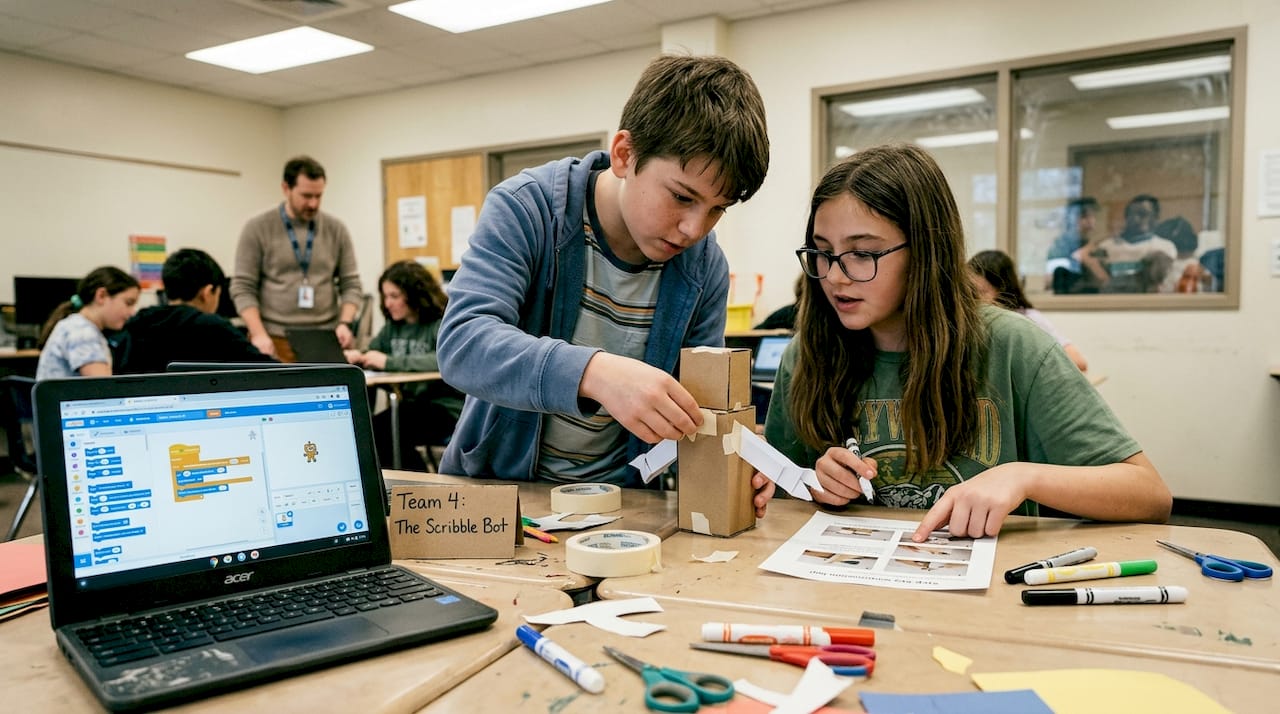
With clear criteria in place, the next step is finding curriculum models that actually deliver on them. The most effective approaches put students in the role of creators, not just consumers of AI.
MIT RAISE’s K-12 AI curriculum is one of the most well-developed examples available. It blends ethics, data privacy, creativity, and hands-on tools like Teachable Machine and Scratch extensions into a coherent learning sequence. Students do not just read about machine learning; they train models, observe bias firsthand, and reflect on what their results mean. That sequence, from building to observing to questioning, is what makes the learning stick.
Practical hands-on activities worth incorporating include:
- Chatbot design projects: Students define a problem, build a conversational agent, and test it with real users
- Image recognition labs: Using free tools, students train classifiers and analyze where and why errors occur
- Generative Adversarial Networks (GANs): Older students explore how AI generates synthetic images and what that means for media trust
- AI ethics simulations: Role-play scenarios where students debate real-world AI deployment decisions
Pro Tip: Scale creative projects to your resource context. A school with limited devices can run Scratch-based AI activities on shared computers, while better-resourced programs can explore cloud-based generative AI curriculum tools.
| Resource | Grade range | Strength | Cost |
|---|---|---|---|
| MIT RAISE | K-12 | Ethics + creativity + hands-on | Free |
| Google Teachable Machine | 4-12 | Visual ML, fast setup | Free |
| Coursera AI for Educators | 6-12+ | Structured, certified | Paid/subsidized |
| Scratch AI extensions | K-8 | Accessible, creative | Free |
The future of AI in schools increasingly favors constructionist approaches, where students learn by building, not by watching. That shift should guide your platform choices.
Integrate generative AI for lesson planning and critical thinking
Generative AI is not just a student tool. It is also a powerful resource for teachers designing lessons, differentiated content, and formative assessments. Used well, it can significantly reduce planning time while raising the quality of student inquiry.
Here is a practical sequence for integrating generative AI into classroom projects:
- Define the learning goal clearly before involving any AI tool
- Introduce prompt engineering as a skill: students learn to write precise, purposeful prompts
- Generate and compare outputs from multiple prompts to build critical evaluation habits
- Apply the output to a real task: a written argument, a data analysis, a design prototype
- Reflect in writing on what the AI got right, what it missed, and why that matters
- Revise and resubmit with student-added reasoning and evidence
This sequence works across subjects. In English, students compare AI-generated essays with their own. In science, they use AI to simulate experimental variables. Coursera and partners offer structured teacher training in exactly these kinds of adaptive, subject-integrated generative AI activities.
Pro Tip: Build a shared GenAI assignment bank with your staff team. Each teacher contributes one tested prompt sequence per unit, and the whole school benefits from a growing, peer-reviewed library.
| Lesson type | Traditional approach | GenAI-enhanced approach | Reported benefit |
|---|---|---|---|
| Essay writing | Teacher feedback only | AI draft + peer + teacher review | Faster revision cycles |
| Science inquiry | Textbook scenarios | AI-simulated variables | Higher engagement |
| Math problem sets | Static worksheets | Adaptive AI-generated sets | Personalized difficulty |
| Assessment feedback | End-of-unit only | Real-time AI formative feedback | Earlier intervention |
The key is that using generative AI in curriculum design should always keep the teacher as the expert decision-maker. AI accelerates the process; it does not replace professional judgment.
Embed AI literacy, ethics, and equity into every subject
One of the most common mistakes in AI curriculum design is treating AI literacy as a standalone computer science topic. It is not. The skills students need, including evaluating AI outputs, recognizing bias, protecting privacy, and reasoning about algorithmic decisions, apply in every classroom.
Here are practical ways to embed AI ethics and literacy across disciplines:
- Math: Analyze how training data shapes model predictions; explore statistical bias in datasets
- Science: Discuss AI in climate modeling and medical diagnosis; question the limits of AI accuracy
- English/Language Arts: Evaluate AI-generated text for tone, accuracy, and missing context
- Arts: Examine AI-generated images and music; debate authorship and creative ownership
- Social Studies: Study real-world AI policy decisions and their equity impacts
The ETH Zurich AI competence model provides a rigorous cross-disciplinary framework that addresses bias, privacy, and human-AI collaboration as core competencies, not electives. It is structured around TPACK (Technological Pedagogical Content Knowledge) and UDL principles, making it directly applicable to diverse classroom settings.
Equity requires deliberate design. Multilingual resources, accessible interfaces, and culturally relevant examples are not extras. They are requirements for a curriculum that works for all students. AI in careers education research consistently shows that underrepresented students benefit most when AI literacy is taught with explicit equity framing.
“Without guardrails, AI tools in classrooms risk reinforcing existing inequalities rather than reducing them. Critical thinking about AI is not a soft skill; it is a survival skill for the digital age.”
For practical implementation guidance, start by auditing your existing curriculum for natural integration points before adding new AI-specific units.
Evaluate the impact: AI tutoring, assessment, and student readiness
Strong curriculum ideas need strong evidence. The good news is that research on AI in education is maturing quickly, and the data is encouraging when programs are implemented thoughtfully.
Key impact indicators to track in your own programs:
- Learning gains: Pre and post assessments comparing AI-supported and traditional cohorts
- Engagement rates: Attendance, task completion, and student self-reports
- Assessment accuracy: Correlation between AI-generated feedback and expert teacher evaluation
- Equity metrics: Performance gaps across demographic groups before and after AI integration
- Teacher confidence: Staff surveys on readiness to use and teach AI tools
The evidence from controlled studies is striking. AI-based tutors have been shown to double learning gains in structured trials, and GenAI assessment tools have achieved a correlation of 0.847 with expert human graders. That level of accuracy makes AI a credible partner in formative assessment, not just a novelty.
| Evidence type | Finding | Implication |
|---|---|---|
| RCT: AI tutor vs. control | Doubled learning gains | Prioritize AI tutoring for foundational skills |
| GenAI assessment accuracy | 0.847 expert correlation | Use AI for formative, not final, grading |
| Student self-report | Higher motivation with AI tools | Design for agency and choice |
| Equity analysis | Gaps persist without explicit design | Build equity metrics into evaluation from day one |
For student engagement strategies that translate these findings into practice, focus on combining AI tutoring with teacher-led reflection sessions. The combination outperforms either approach alone.
Why authentic learning—not AI ‘bells and whistles’—sets students up for real AI futures
Here is a perspective that does not always get enough attention: the schools seeing the best outcomes from AI curriculum are not the ones with the most sophisticated tools. They are the ones that kept the focus on authentic inquiry and let the technology serve that goal.
There is a real risk in chasing every new AI platform. When curriculum developers prioritize novelty, students learn to be consumers of AI rather than critical thinkers about it. The debate about AI in education is real: optimists highlight efficiency gains, while skeptics warn that overreliance erodes the habits of mind that make learning meaningful.
Both sides have a point. AI tools are starting points, not destinations. The curriculum that will serve students best is one that builds discernment, adaptability, and ethical courage as durable habits. Those qualities outlast any specific platform.
Our recommendation: treat your AI curriculum as a living document. Revisit it every semester based on student performance data, teacher feedback, and new research. Explore AI in education seminars and peer networks to stay current without being reactive. The goal is students who can navigate AI-powered environments they have never seen before, not just the ones you taught them about.
Connect with proven AI curriculum solutions for your school
Designing an effective AI curriculum takes more than good intentions. It requires the right frameworks, tools, and implementation support. At Airitual, we work directly with educational institutions to build AI curriculum strategies that are practical, equitable, and measurable. Whether you are starting from scratch or refining an existing program, our AI in education solutions give you a clear path forward. Explore our step-by-step implementation guide for structured rollout support, or use our AI for education checklist to evaluate tools confidently. Schedule a FREE Strategy Session with our team to get tailored recommendations for your school or district.
Frequently asked questions
What are the core components of an effective AI curriculum?
An effective AI curriculum includes technical, ethical, critical, and practical knowledge integrated across subjects, not confined to a single computer science class. These four pillars ensure students understand AI, question it, and apply it responsibly.
How can schools implement hands-on AI learning activities?
Schools can adopt models like MIT RAISE’s K-12 curriculum to introduce AI through Scratch, image recognition labs, and creative design projects that make abstract concepts tangible. These approaches work across grade levels and resource contexts.
How does generative AI support teacher lesson planning?
Generative AI tools and training from platforms like Coursera help teachers design adaptive lessons, generate differentiated content, and provide personalized student feedback more efficiently. The teacher remains the expert; AI accelerates the workflow.
What evidence is there for the impact of AI tutoring in schools?
Controlled studies show that AI tutors doubled learning gains and GenAI assessment tools reached a 0.847 correlation with expert human graders. These results support using AI as a formative assessment partner alongside teacher evaluation.
Recommended
- How to Use Generative AI for Curriculum Success | Artificial Intelligence
- AI for student engagement: proven strategies for better learning | Artificial Intelligence
- Future of AI in Schools 2026: Transforming Learning | Artificial Intelligence
- How to Implement AI in Education for Enhanced Results | Artificial Intelligence
Recent Comments