

Educational institutions face mounting pressure to integrate artificial intelligence into classrooms and administrative workflows, yet many leaders struggle with where to begin. The complexity of selecting appropriate tools, training staff, and measuring impact creates significant barriers to adoption. Without a structured approach, AI initiatives risk wasting resources or failing to deliver meaningful improvements. This guide provides educational leaders with a clear, actionable roadmap for successfully implementing AI-powered solutions that enhance learning outcomes while streamlining administrative processes. You’ll discover practical steps for assessing readiness, selecting tools, executing integration, and verifying results.
Table of Contents
- Key takeaways
- Assessing readiness and setting goals for AI adoption
- Selecting and preparing AI-powered tools for the classroom and administration
- Implementing AI in education: step-by-step integration process
- Monitoring, evaluating, and optimizing AI-powered educational outcomes
- Discover AI solutions tailored for education at Airitual
- Frequently asked questions
Key Takeaways
| Point | Details |
|---|---|
| Assess readiness and goals | Before AI adoption, evaluate your current capabilities and define specific educational objectives to guide tool selection and implementation. |
| Stepwise implementation | A phased rollout helps build stakeholder buy in and demonstrates impact before full scale deployment. |
| Stakeholder involvement | Engage teachers, administrators, IT staff, and students to align AI efforts with needs and secure broad support. |
| Ongoing monitoring | Establish metrics and continuous evaluation to ensure AI tools meet learning goals and ethical standards. |
Assessing readiness and setting goals for AI adoption
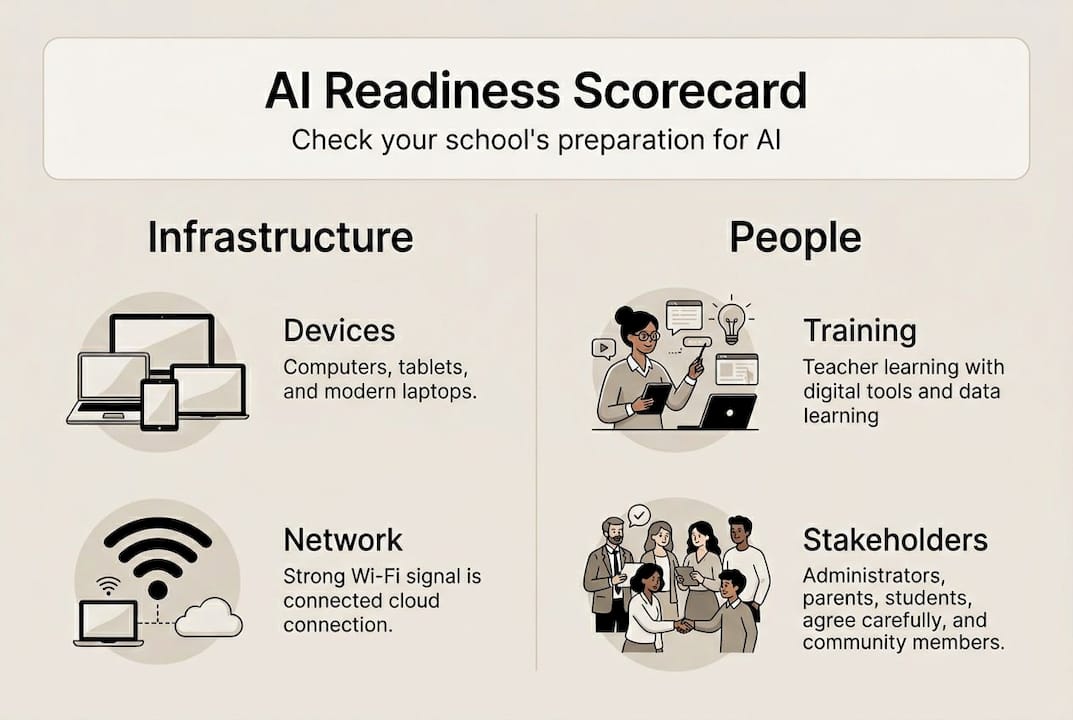
Before introducing AI technologies into your educational environment, you must conduct a thorough evaluation of your institution’s current capabilities and future objectives. Assessing infrastructure and educational goals is critical before any AI integration attempt. Start by examining your existing digital infrastructure including network bandwidth, device availability, and technical support capacity. Many schools discover their current systems cannot support advanced AI applications without significant upgrades.
Define specific educational goals that AI will help you achieve. Are you aiming to personalize learning experiences for diverse student populations? Do you want to automate grading and administrative tasks to free up educator time? Perhaps you need better data analytics to identify at-risk students earlier. Clear objectives guide tool selection and implementation strategies. Without defined goals, you risk adopting technology for its own sake rather than solving real problems.
Involve key stakeholders throughout this assessment phase. Teachers, administrators, IT staff, and even students bring valuable perspectives on needs and potential obstacles. A math department might prioritize adaptive learning platforms, while counselors may need AI-powered early warning systems. This collaborative approach ensures your AI strategy aligns with institutional priorities and gains broader support during implementation.
Identify potential challenges early in the process. Budget constraints often limit options, while staff training requirements can delay rollout timelines. Data privacy concerns require careful vendor vetting and policy development. Resistance to change among faculty represents another common hurdle that strategic communication can address. By anticipating these obstacles during the readiness phase, you can develop mitigation strategies before they derail your initiative.
Pro Tip: Create a readiness scorecard that rates your institution across key dimensions like technical infrastructure, budget availability, staff digital literacy, and leadership support. This visual tool helps prioritize improvement areas before launching AI integration.
Selecting and preparing AI-powered tools for the classroom and administration
Once you’ve assessed readiness and defined goals, the next critical step involves identifying and evaluating AI technologies that match your specific needs. The education technology market offers hundreds of AI-powered solutions ranging from intelligent tutoring systems to automated scheduling platforms. Choosing the right AI tools requires comparison based on features, compatibility, and educational impact.
Start by categorizing tools according to their primary function. Personalized learning platforms like adaptive assessment systems adjust content difficulty based on individual student performance. Grading automation tools use natural language processing to evaluate written assignments and provide feedback. Administrative AI streamlines scheduling, enrollment management, and communication workflows. Matching tool categories to your defined goals narrows the selection field significantly.
Compare shortlisted options using a structured evaluation framework:
| Evaluation Criteria | What to Assess |
|---|---|
| Educational effectiveness | Evidence of improved learning outcomes, engagement metrics, research backing |
| Technical compatibility | Integration with existing learning management systems, device requirements, bandwidth needs |
| Cost structure | Licensing fees, implementation costs, ongoing support expenses, scalability pricing |
| Vendor support | Training resources, technical assistance availability, update frequency, community forums |
| Data privacy compliance | FERPA adherence, data encryption standards, student information protection policies |
Plan comprehensive staff preparation before deploying any AI tool. Teachers need training not just on technical operation but on pedagogical integration strategies. How do educators use AI-generated insights to inform instruction? When should they override algorithmic recommendations? Administrative staff require different training focused on workflow optimization and data interpretation. Budget adequate time for this preparation phase because inadequate training represents a primary cause of failed technology initiatives.
Ensure all selected tools comply with educational data privacy regulations. The Family Educational Rights and Privacy Act (FERPA) establishes strict requirements for protecting student information. Vet vendors carefully, reviewing their security protocols, data storage practices, and breach notification procedures. Require contractual guarantees about data ownership and usage restrictions. Privacy violations can result in significant legal and reputational consequences.

Pro Tip: Request trial periods or pilot licenses from vendors before committing to full implementation. Real-world testing with actual students and staff reveals usability issues and compatibility problems that product demonstrations often miss.
Implementing AI in education: step-by-step integration process
Successful AI integration requires a methodical, phased approach rather than institution-wide deployment. A phased, stepwise implementation enhances AI adoption success and acceptance among educators and students. This systematic process minimizes disruption while maximizing learning opportunities from early experiences.
-
Launch a focused pilot program in one or two classrooms or departments. Select enthusiastic early adopters who can provide detailed feedback and serve as champions for broader rollout. Choose a pilot scope large enough to generate meaningful data but small enough to manage effectively. A single grade level or subject area often works well for classroom AI tools, while one department suits administrative applications.
-
Establish clear success criteria and data collection methods before the pilot begins. What specific outcomes will indicate the AI tool is working as intended? How will you gather feedback from users? Set up regular check-ins with pilot participants to discuss challenges, unexpected benefits, and suggested improvements. Document everything because these insights inform subsequent phases.
-
Collect and analyze feedback systematically throughout the pilot period. Survey students about engagement and learning experience changes. Interview teachers about workflow impacts and pedagogical effectiveness. Review quantitative data on the metrics you defined earlier. Look for both anticipated outcomes and surprising results that might suggest new applications or necessary adjustments.
-
Make data-driven adjustments based on pilot findings before expanding. Perhaps the AI tool requires different training approaches than initially planned. Maybe certain features prove more valuable than expected while others go unused. Technical integration issues might need resolution. Address these discoveries during the pilot phase when stakes are lower and changes are easier to implement.
-
Scale up gradually to additional classrooms, departments, or administrative units. Use lessons learned from the pilot to refine training programs, support resources, and implementation timelines. Maintain close communication with new user groups, recognizing that each expansion phase may reveal unique challenges. Avoid rushing this process because premature scaling often undermines adoption.
-
Integrate AI tools with broader school systems and workflows as adoption matures. Connect classroom AI platforms with your student information system for seamless data flow. Link administrative AI tools with existing scheduling and communication platforms. These integrations amplify benefits by reducing duplicate data entry and enabling more comprehensive analytics.
Monitoring, evaluating, and optimizing AI-powered educational outcomes
Implementing AI tools represents only the beginning of a successful integration journey. Ongoing monitoring and evaluation are vital to ensure AI supports educational goals effectively. Continuous assessment allows you to verify impact, identify problems, and optimize performance over time.
Define clear success metrics aligned with your original goals. Student engagement indicators might include time on task, assignment completion rates, or participation in AI-facilitated discussions. Learning outcome metrics could track assessment scores, skill mastery progression, or achievement gap reduction. Administrative efficiency measures often focus on time saved, error reduction, or resource allocation improvements. Select metrics that genuinely reflect your priorities rather than vanity numbers that look impressive but lack meaningful connection to educational quality.
Establish monitoring systems that provide regular visibility into these metrics. Many AI platforms include built-in dashboards and reporting tools that visualize key performance indicators. Supplement these with periodic surveys, focus groups, and classroom observations to capture qualitative impacts that numbers alone miss. Create a review cadence such as monthly metric checks and quarterly comprehensive evaluations.
| Metric Category | Example Indicators | Data Sources |
|---|---|---|
| Student engagement | Time on task, assignment completion, interaction frequency | AI platform analytics, teacher observations |
| Learning outcomes | Assessment scores, skill mastery rates, achievement gaps | Learning management system, standardized tests |
| Administrative efficiency | Processing time, error rates, resource utilization | Administrative systems, staff surveys |
| User satisfaction | Net promoter scores, usage patterns, support requests | Surveys, help desk tickets, usage logs |
Identify and address issues proactively as they emerge. Algorithmic bias can produce unfair outcomes for certain student groups, requiring immediate investigation and correction. Technical problems like slow load times or integration failures frustrate users and reduce adoption. Unintended consequences such as over-reliance on AI recommendations or reduced human interaction need careful management. Regular monitoring helps catch these problems early when they’re easier to fix.
Iterate and optimize based on accumulated evidence. Adjust AI tool settings to better match your context. Refine training content to address common user struggles. Modify implementation processes to reduce friction points. Share success stories and best practices across your institution to accelerate learning. This continuous improvement mindset transforms AI integration from a one-time project into an ongoing capability that evolves with your needs.
Pro Tip: Create a cross-functional AI review team including teachers, administrators, IT staff, and student representatives. This diverse group brings multiple perspectives to evaluation discussions and helps ensure optimization efforts address real user needs rather than assumptions.
Discover AI solutions tailored for education at Airitual
Successfully integrating AI into your educational institution requires more than good intentions. It demands strategic planning, careful tool selection, systematic implementation, and continuous optimization. Airitual specializes in helping educational leaders navigate this complex journey with AI solutions designed specifically for education environments. Our comprehensive resources include detailed guides for every stage of AI adoption, from initial readiness assessment through long-term optimization.
Explore our AI adoption guide to deepen your understanding of integration best practices. Access our education AI tool checklist to make informed decisions about which technologies best serve your specific needs. We provide expert training resources that empower educators and administrators to leverage AI effectively while maintaining focus on educational quality and student success.
Frequently asked questions
What challenges do schools typically face when integrating AI?
Schools frequently encounter budget constraints that limit their ability to license comprehensive AI solutions or upgrade necessary infrastructure. Staff training needs create another significant hurdle because effective AI use requires both technical proficiency and pedagogical understanding. Data privacy concerns demand careful vendor vetting and policy development to protect student information. Resistance to change among faculty who fear technology will replace human judgment or add to their workload represents a common cultural challenge. Addressing these obstacles early through stakeholder engagement, phased implementation, and transparent communication significantly improves integration success rates.
How can educators ensure AI tools respect student privacy?
Choose AI vendors that demonstrate clear compliance with educational privacy laws including the Family Educational Rights and Privacy Act (FERPA). Review vendor contracts carefully to verify data ownership rights, usage restrictions, and breach notification procedures. Implement strict access controls that limit who can view student data and under what circumstances. Require data encryption both in transit and at rest to protect against unauthorized access. Conduct regular privacy audits of your AI tools and update policies as regulations evolve or new technologies emerge.
What metrics should schools track to measure AI effectiveness?
Track student engagement indicators like time on task, assignment completion rates, and active participation in AI-facilitated learning activities. Monitor learning outcomes through assessment scores, skill mastery progression, and achievement gap trends among different student populations. Measure administrative efficiency gains by calculating time saved on routine tasks, error reduction in processes like scheduling or grading, and resource allocation improvements. Collect user satisfaction data from teachers, students, and administrators through surveys and usage pattern analysis. Adjust AI tool settings, training approaches, and implementation strategies based on these metrics to continuously optimize performance and ensure alignment with educational goals.
Recommended
- How to Implement AI in Education for Enhanced Results | Artificial Intelligence
- How to Implement AI Workflows for Education Success | Artificial Intelligence
- Educational AI Adoption Guide for Effective Integration | Artificial Intelligence
- In Education | Artificial Intelligence
- Token economy per la classe: la guida passo dopo passo per trasformare – Sara Conti
Recent Comments