

More than 60 percent of American marketing directors report that traditional lead generation is delivering diminishing returns. With digital competition rising every quarter, even well-crafted campaigns can struggle to keep targets engaged and interested. This guide lays out practical, AI-driven methods that help small and medium enterprises sharpen customer engagement and reliably increase conversion rates in the American market.
Table of Contents
Quick Summary
| Key Insight | Explanation |
| 1. Assess Your AI Readiness | Evaluate technological infrastructure, data quality, and workforce skills to determine integration potential. |
| 2. Choose Effective AI Tools | Select lead generation tools that align with your business goals and offer advanced data capabilities. |
| 3. Implement Dynamic Lead Capture | Customize lead capture systems to adapt in real-time and effectively engage potential customers. |
| 4. Automate Lead Scoring | Use AI to streamline lead qualification, focusing efforts on high-value prospects for better conversion. |
| 5. Continuously Monitor Performance | Establish regular reviews of campaign metrics to identify trends and optimize marketing strategies. |
Step 1: Assess Business Readiness for AI Integration
Evaluating your organization’s potential for artificial intelligence integration requires a systematic approach to understanding your current capabilities and potential limitations. By utilizing a comprehensive assessment framework, you can determine whether your business is prepared to effectively adopt and leverage AI technologies.
The assessment process begins with a multidimensional evaluation of your organizational readiness. Research indicates that effective AI integration depends on several critical dimensions, including technological infrastructure, data quality, workforce skills, and strategic alignment. Researchers have developed a structured AI Capability Assessment Model that examines core capability areas such as business strategy, technological resources, organizational culture, and potential risks. This model helps organizations identify strengths and potential gaps in their AI readiness.
Key areas to evaluate include your current technological capabilities, data management practices, employee skill levels, and organizational openness to innovation. Consider conducting internal surveys, skills assessments, and technology audits to gain a comprehensive view of your AI integration potential. Pay special attention to your team’s understanding of AI technologies and their potential applications within your specific business context.
Pro Tip: Start with a small pilot project that allows your team to gain hands-on experience with AI technologies, helping you realistically assess your organization’s capabilities and build confidence in AI integration.
Here’s a summary of the core dimensions involved in assessing business AI readiness:
| Dimension | What It Evaluates | Business Impact |
| Technological Infrastructure | IT systems and software in place | Enables efficient AI deployment |
| Data Quality | Accuracy and accessibility of data | Ensures reliable AI insights |
| Workforce Skills | Staff experience with AI and data | Supports adoption and innovation |
| Strategic Alignment | How well AI fits business goals | Drives measurable outcomes |
Step 2: Select AI-Powered Lead Generation Tools
Selecting the right artificial intelligence powered lead generation tools can dramatically transform your marketing strategy and improve conversion rates. This step involves carefully evaluating and choosing technologies that align with your specific business objectives and marketing needs.
Comprehensive guides on AI lead generation tools highlight the importance of selecting platforms that offer robust data quality, advanced artificial intelligence capabilities, and measurable return on investment. When evaluating potential tools, consider factors such as integration capabilities, predictive analytics features, data enrichment functionalities, and compatibility with your existing customer relationship management systems.
Key considerations for tool selection include assessing the tool’s ability to automate lead scoring, predict customer behavior, personalize outreach strategies, and provide actionable insights. Look for platforms that offer real-time data analysis, machine learning algorithms for lead qualification, and intuitive dashboards that simplify complex data interpretation. Pay attention to scalability, ensuring the tool can grow alongside your business and adapt to changing market dynamics.
Pro Tip: Request free trials or demo versions of multiple AI lead generation tools to conduct hands-on testing and compare their performance before making a final investment decision.
Compare key features often found in leading AI lead generation tools:
| Feature | Typical Benefit | Example Use Case |
| Predictive Analytics | Forecasts likely customers | Prioritize high-value prospects |
| Real-Time Data Enrichment | Improves lead information | Fills gaps in contact profiles |
| Automated Scoring | Ranks leads efficiently | Focus sales on hottest leads |
| CRM Integration | Syncs with existing systems | Streamlines lead handoff |
Step 3: Implement and Customize AI Lead Capture Systems
Implementing and customizing AI lead capture systems transforms your digital marketing approach by creating intelligent mechanisms that automatically identify and engage potential customers. This critical step involves strategically integrating advanced technologies that can analyze user behavior and generate high quality leads.
Modern content marketing platforms offer sophisticated AI-powered tools for seamless lead capture and personalization. When implementing your system, focus on designing dynamic capture forms that adapt in real time based on user interactions, utilizing machine learning algorithms to optimize form fields, reduce friction, and increase conversion rates. These systems should intelligently collect demographic information, track user engagement patterns, and automatically segment leads based on their potential value and likelihood of conversion.
Customization is key to maximizing your AI lead capture system’s effectiveness. Configure your tools to integrate smoothly with existing customer relationship management platforms, enabling automatic data synchronization and comprehensive lead tracking. Develop personalized communication workflows that trigger specific actions based on user behavior, such as sending targeted email sequences, recommending relevant content, or initiating direct communication when a potential lead demonstrates high engagement signals.
Pro Tip: Regularly conduct A/B testing on your AI lead capture forms and workflows to continuously refine your system’s performance and optimize conversion rates.
Step 4: Automate Lead Qualification and Scoring Processes
Automating lead qualification and scoring processes represents a critical advancement in streamlining your sales and marketing workflows. This step transforms how your organization identifies and prioritizes potential customer opportunities by leveraging artificial intelligence to evaluate lead potential with unprecedented precision and efficiency.

The automation process begins by establishing comprehensive scoring criteria that reflect your specific business objectives. Develop a sophisticated machine learning model that assigns numerical values to lead interactions based on multiple dimensions such as demographic characteristics, engagement history, website behavior, content consumption patterns, and previous conversion touchpoints. Configure your AI system to dynamically adjust scoring weights in real time, ensuring that your qualification process remains adaptive and responsive to evolving market conditions.
Implement intelligent segmentation strategies that automatically categorize leads into distinct tiers based on their calculated potential value. Create automated communication pathways that trigger personalized outreach sequences corresponding to each lead’s specific score and engagement profile. This approach enables your sales team to focus energy on high probability prospects while maintaining systematic follow-up mechanisms for leads across all potential value segments. By integrating machine learning algorithms that continuously refine lead scoring models, you can progressively improve the accuracy and effectiveness of your qualification processes.
Pro Tip: Establish a periodic review process where your sales and marketing teams collaboratively assess the performance of your AI lead scoring model, identifying opportunities for refinement and ensuring alignment with changing business objectives.
Step 5: Monitor Performance and Optimize Campaigns
Monitoring performance and optimizing AI driven lead generation campaigns requires a strategic approach that combines real time data analysis with continuous refinement. This critical stage transforms raw performance metrics into actionable insights that can dramatically improve your marketing effectiveness and return on investment.
Establish a comprehensive performance tracking framework that captures key performance indicators across multiple dimensions. Implement advanced analytics dashboards that provide granular visibility into lead generation metrics such as conversion rates, engagement levels, customer acquisition costs, and revenue attribution. Configure automated reporting mechanisms that generate dynamic insights, highlighting trends, anomalies, and potential optimization opportunities. Your monitoring system should leverage machine learning algorithms to detect subtle patterns and provide predictive recommendations for campaign improvements.
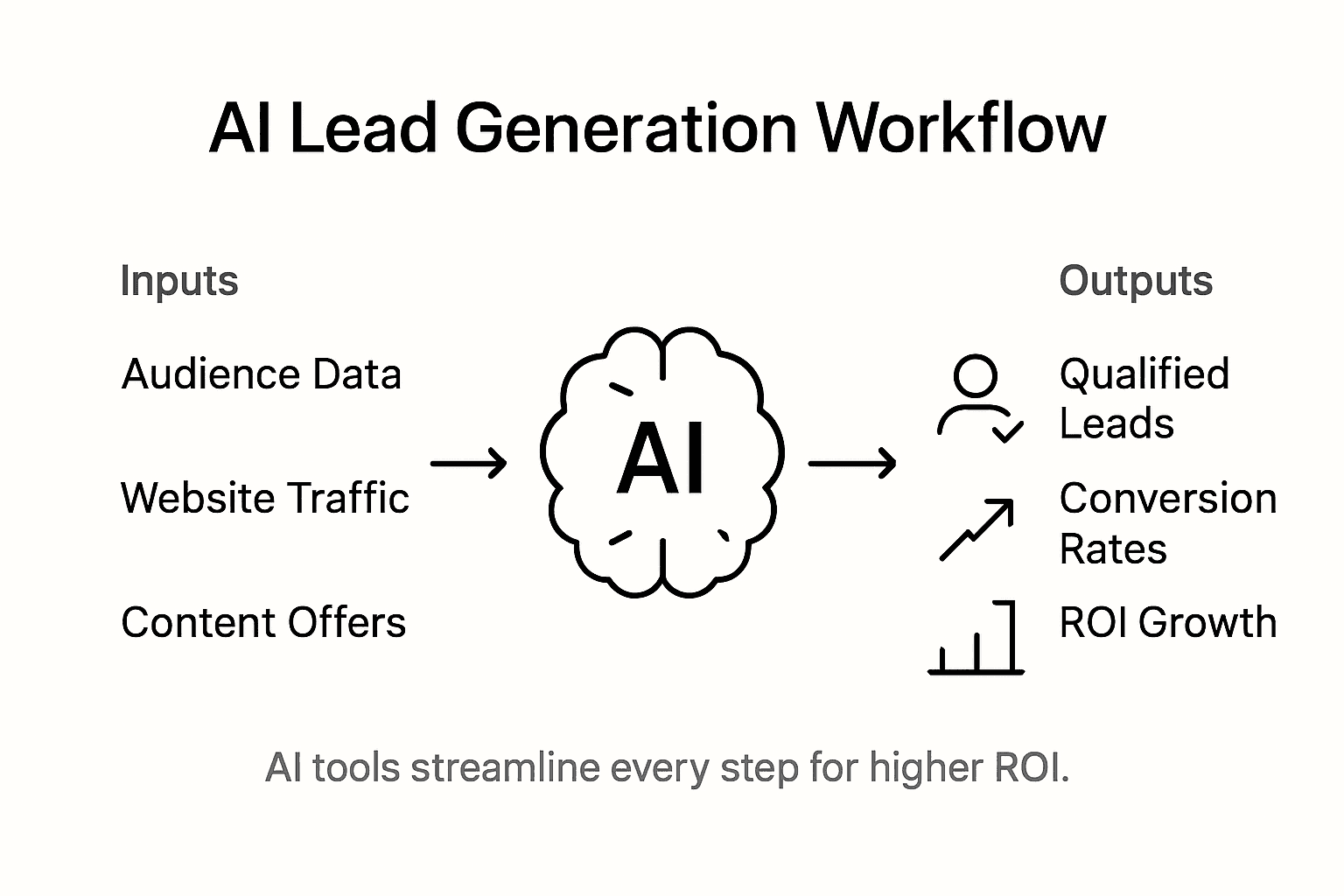
Develop a systematic optimization workflow that enables rapid iteration and adaptation of your lead generation strategies. Create cross functional feedback loops between marketing, sales, and data analytics teams to ensure holistic performance assessment. Use AI powered predictive modeling to simulate potential campaign modifications, allowing you to test and validate optimization strategies before full scale implementation. Continuously experiment with variables such as targeting parameters, messaging approaches, content types, and communication channels to incrementally enhance your campaign performance.
Pro Tip: Schedule monthly performance review sessions where your team critically examines AI generated insights, challenging assumptions and identifying innovative optimization strategies that can unlock additional revenue potential.
Unlock Higher ROI with Expert AI Lead Generation Solutions
The article highlights the challenges of adopting artificial intelligence for lead generation including assessing business readiness, choosing the right AI-powered tools, and automating lead qualification to boost conversion rates. Many organizations struggle with integrating AI technologies effectively due to gaps in data quality, workforce skills, or strategic alignment. If you want to overcome these pain points and achieve measurable outcomes, tailored support is essential.
At Airitual, we specialize in helping businesses like yours navigate the complexities of AI integration with customized strategies that focus on your unique goals. Our consultancy empowers you to select and implement AI lead generation tools that elevate customer engagement and automate tedious workflows painlessly. We focus on building scalable systems that continuously optimize lead capture, scoring, and campaign performance by leveraging proven AI capabilities.
Take action now to transform your lead generation approach by partnering with experts who understand how to turn artificial intelligence into real revenue growth. Discover how our AI-powered business solutions can help you stay ahead of competitors and drive sustainable results through smarter automation and strategic insights.
Ready to generate better leads with AI that works for your business? Visit Airitual’s landing page and schedule your free strategy session today. Let us help you unlock the full potential of AI lead generation for higher ROI and lasting impact.
Frequently Asked Questions
How can I assess my organization’s readiness for AI integration in lead generation?
To assess your organization’s readiness, evaluate key areas such as your technological infrastructure, data quality, workforce skills, and strategic alignment with business goals. Conduct internal surveys and skills assessments to identify strengths and gaps, and start planning tailored pilot projects to build experience with AI technologies.
What features should I look for in AI-powered lead generation tools?
When selecting AI-powered lead generation tools, focus on features like predictive analytics, real-time data enrichment, and automated scoring. Evaluate how well these tools can integrate with your existing systems to ensure seamless data flow and enhance lead qualification processes.
How do I customize AI lead capture systems for better performance?
To customize your AI lead capture systems, design dynamic forms that adapt based on user interactions and segment leads according to their engagement. Configure workflows that trigger personalized communications, enhancing user experience and increasing conversion rates.
What steps should I take to automate lead qualification and scoring?
Start by establishing clear scoring criteria based on your business objectives and develop machine learning models to assess lead potential. Regularly review your scoring framework to adapt to changing market conditions and optimize your outreach strategies accordingly.
How do I monitor and optimize performance in AI-driven lead generation campaigns?
Create a performance tracking framework that captures key metrics and use advanced analytics for real-time insights. Schedule regular review sessions to analyze campaign performance and make necessary adjustments to your lead generation strategies to enhance ROI within months.
Recent Comments