

Complex decision-making often stalls progress in both educational institutions and governmental organizations. Leaders looking for practical ways to improve efficiency and connect more effectively with stakeholders will find that AI-powered optimization offers tangible solutions. By simulating intelligent human thought and systematically analyzing operational challenges, these technologies enable more responsive and intelligent systems. This discussion offers global business leaders actionable insights into the core concepts and real-world impact of advanced AI optimization strategies.
Table of Contents
- Defining AI-Powered Optimization And Core Concepts
- Types Of AI Optimization And Key Technologies
- How AI Optimization Works In Practice
- Real-World Applications Across Sectors
- Risks, Limitations, And Ethical Considerations
- Choosing Partners And Measuring Optimization Impact
Key Takeaways
| Point | Details |
|---|---|
| AI Optimization Enhances Efficiency | AI-powered optimization integrates intelligent systems to improve operational performance across various industries. |
| Diverse Technologies Offer Unique Benefits | Different AI optimization technologies, such as evolutionary computation and neural networks, address specific computational challenges effectively. |
| Implementation Requires Strategic Planning | Successful AI optimization initiatives depend on methodical processes including data assessment, algorithm selection, and continuous monitoring. |
| Ethical Considerations are Essential | Organizations must address data privacy, algorithmic bias, and accountability when deploying AI optimization technologies to ensure responsible use. |
Defining AI-Powered Optimization and Core Concepts
Artificial Intelligence optimization represents a sophisticated technological approach designed to enhance operational efficiency through intelligent algorithmic systems. At its core, AI-powered optimization transforms complex decision-making processes by simulating advanced problem-solving strategies that mimic human cognitive patterns. Foundational AI optimization concepts demonstrate how intelligent systems systematically analyze intricate challenges across diverse operational landscapes.
The fundamental mechanics of AI optimization involve several critical components:
- Algorithmic learning and adaptation
- Dynamic constraint management
- Predictive performance modeling
- Real-time decision optimization
- Scalable computational frameworks
These sophisticated mechanisms enable organizations to transcend traditional operational limitations by introducing intelligent, data-driven problem-solving capabilities. AI optimization algorithms continuously evaluate multiple potential solutions, selecting the most efficient pathway through complex decision trees with unprecedented speed and accuracy.

Understanding AI optimization requires recognizing its transformative potential across industries. Strategic implementation allows businesses, educational institutions, and governmental organizations to unlock unprecedented operational capabilities. By integrating AI-powered optimization frameworks, enterprises can develop more responsive, intelligent systems that adapt dynamically to changing environmental conditions.
Pro tip: Start small by identifying one specific operational challenge where AI optimization could deliver measurable improvements, and develop a targeted pilot project to demonstrate potential value.
Types of AI Optimization and Key Technologies
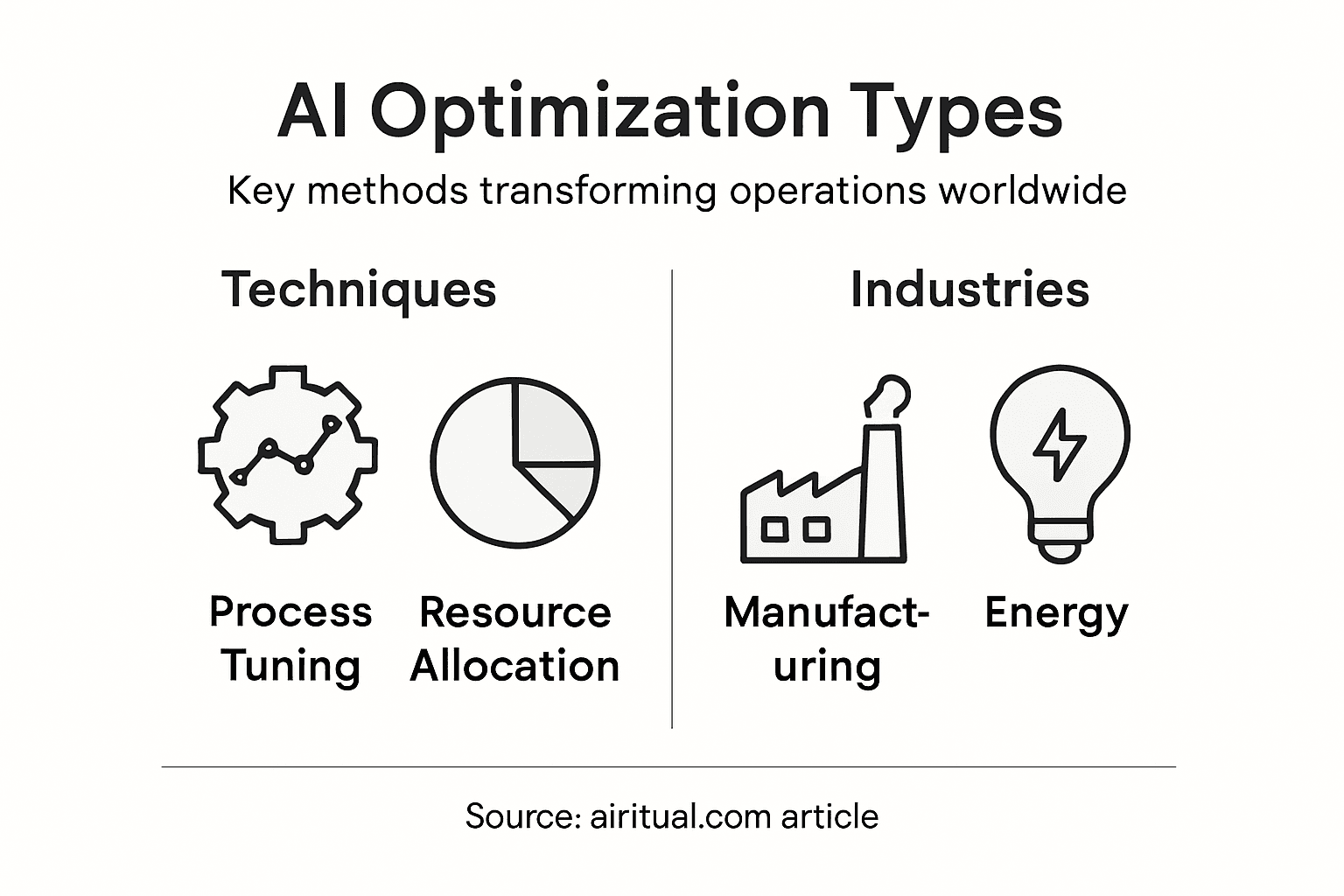
AI optimization encompasses a diverse range of sophisticated technological approaches designed to enhance computational performance and problem-solving capabilities. Population-based optimization algorithms represent a critical category of techniques that enable intelligent systems to tackle complex challenges across multiple domains. These advanced methodologies include genetic algorithms, particle swarm optimization, and innovative approaches like artificial bee colony and lightning search algorithms.
The primary types of AI optimization technologies can be categorized into several key frameworks:
- Evolutionary computation techniques
- Swarm intelligence algorithms
- Neural network optimization methods
- Hybrid intelligent systems
- Machine learning performance enhancement strategies
Each optimization approach offers unique advantages in addressing computational challenges. Workload optimization methods are particularly significant, focusing on improving system efficiency while minimizing power consumption. Brain-inspired hybrid approaches demonstrate remarkable potential in developing more intelligent and adaptive computational systems that can dynamically adjust to complex operational requirements.
Here’s a summary identifying how different AI optimization technologies serve distinct use cases and benefits:
| Optimization Technology | Primary Use Case | Typical Benefit |
|---|---|---|
| Evolutionary computation | Complex system optimization | Diverse solution exploration |
| Swarm intelligence | Distributed resource allocation | Improved adaptability and speed |
| Neural network optimization | Learning complex data patterns | Enhanced accuracy and efficiency |
| Hybrid intelligent systems | Integrating multiple techniques | Flexibility for varied challenges |
| Machine learning enhancement | Automated model improvement | Continuous performance gains |
Understanding these optimization technologies requires recognizing their transformative potential across various industries. Strategic implementation allows organizations to develop more responsive and intelligent systems that can adapt to rapidly changing technological landscapes. By leveraging advanced AI optimization techniques, enterprises can unlock unprecedented computational capabilities and drive innovation across multiple operational domains.
Pro tip: Evaluate your organization’s specific computational challenges and select AI optimization techniques that align most closely with your unique performance and efficiency requirements.
How AI Optimization Works in Practice
Practical AI optimization involves a sophisticated, multi-step approach to transforming computational processes and organizational performance. Cloud computing resource allocation demonstrates how intelligent systems systematically enhance operational efficiency through dynamic, adaptive strategies. This process integrates advanced algorithms that continuously analyze and adjust computational resources to maximize performance and minimize potential bottlenecks.
The practical implementation of AI optimization typically encompasses several critical stages:
- Initial data collection and assessment
- Algorithm selection and model training
- Performance benchmarking
- Continuous monitoring and adaptive recalibration
- Infrastructure scalability optimization
Each stage requires precise technical execution and strategic planning. Performance tuning mechanisms enable organizations to develop increasingly sophisticated AI systems that can dynamically respond to complex operational challenges. AI optimization lifecycle management provides a comprehensive framework for systematically deploying and maintaining intelligent computational strategies across diverse technological environments.
Understanding the practical application of AI optimization requires recognizing its transformative potential for organizational innovation. Strategic implementation allows businesses to create more responsive, intelligent systems that can adapt rapidly to changing technological landscapes. By leveraging advanced optimization techniques, enterprises can unlock unprecedented computational capabilities and drive meaningful technological advancement.
Pro tip: Create a baseline performance measurement before implementing AI optimization to accurately track and quantify improvements in your organizational systems.
Real-World Applications Across Sectors
AI optimization is transforming operational landscapes across multiple industries, delivering unprecedented efficiency and strategic capabilities. Energy transition sector optimization demonstrates how intelligent systems can revolutionize resource management, enabling organizations to make data-driven decisions that enhance performance and sustainability. These advanced technologies are no longer theoretical concepts but practical tools driving meaningful transformation worldwide.
Cross-sector AI optimization applications encompass several critical domains:
- Energy management and grid stability
- Network infrastructure enhancement
- Telecommunications performance optimization
- Manufacturing process improvement
- Logistics and supply chain efficiency
- Public service delivery streamlining
Each sector experiences unique benefits from intelligent optimization strategies. Operational intelligence frameworks enable organizations to tackle complex challenges with unprecedented precision. Network environment optimization provides concrete evidence of how AI can reduce operational costs, improve service quality, and create more responsive technological ecosystems across diverse industries.
The transformative potential of AI optimization extends far beyond traditional technological boundaries. By integrating intelligent algorithms, businesses and governmental organizations can develop adaptive systems that respond dynamically to changing operational requirements. This approach enables unprecedented levels of efficiency, predictability, and strategic responsiveness across multiple sectors.
Compare how AI optimization impacts select industries for a clearer view of its cross-sector value:
| Industry | Main AI Optimization Focus | Strategic Outcome |
|---|---|---|
| Energy | Grid stability and allocation | Lower costs, improved reliability |
| Manufacturing | Process automation and scheduling | Higher output, less waste |
| Telecom | Network traffic optimization | Faster service, reduced downtime |
| Logistics | Supply chain and routing | Faster delivery, cost reduction |
| Public Sector | Service delivery improvement | Streamlined operations, transparency |
Pro tip: Start by identifying one specific operational bottleneck in your organization and explore targeted AI optimization solutions that could address that precise challenge.
Risks, Limitations, and Ethical Considerations
AI optimization technologies, while transformative, demand rigorous ethical scrutiny and comprehensive risk management strategies. Service innovation ethical dimensions reveal critical challenges that organizations must navigate carefully to ensure responsible technological deployment. The potential for unintended consequences requires a proactive approach to understanding and mitigating potential risks inherent in intelligent systems.
Key ethical considerations in AI optimization include:
- Data privacy protection
- Algorithmic bias prevention
- Transparency in decision-making processes
- Accountability frameworks
- Fairness and non-discriminatory system design
- Informed consent mechanisms
- Potential socioeconomic disruption
Each potential risk requires strategic mitigation and ongoing assessment. Responsible AI governance demands a multifaceted approach that balances technological innovation with human-centric ethical principles. AI research ethical challenges highlight the critical need for comprehensive legal and regulatory frameworks that can adapt to rapidly evolving technological landscapes.
Navigating the complex ethical terrain of AI optimization requires organizations to develop sophisticated risk management strategies. By implementing robust governance models, businesses can harness the transformative potential of AI while maintaining a commitment to transparency, fairness, and societal well-being. This balanced approach ensures that technological advancement remains aligned with fundamental human values and social responsibilities.
Pro tip: Develop a comprehensive ethical review process that includes diverse stakeholders and regularly audits AI systems for potential biases and unintended consequences.
Choosing Partners and Measuring Optimization Impact
Selecting the right AI optimization partner is crucial for transforming organizational performance and achieving meaningful technological advancement. AI optimization partner selection criteria require a comprehensive evaluation of technological expertise, proven track records, and alignment with strategic organizational goals. This process demands careful assessment of potential collaborators who can deliver measurable, impactful optimization solutions.
Key considerations when choosing AI optimization partners include:
- Demonstrated technological competence
- Proven implementation experience
- Alignment with organizational ethical standards
- Scalability of proposed solutions
- Transparent performance measurement methodologies
- Adaptability to specific industry requirements
- Cost-effectiveness of optimization strategies
Measuring optimization impact requires a multidimensional approach that goes beyond traditional performance metrics. Strategic performance evaluation involves analyzing both quantitative and qualitative outcomes across various operational domains. Defining optimization project KPIs enables organizations to establish clear benchmarks for assessing the tangible value generated by AI-powered optimization initiatives.
Successful partnerships in AI optimization demand continuous collaboration, transparent communication, and a shared commitment to driving meaningful technological transformation. By developing robust evaluation frameworks and maintaining rigorous performance standards, organizations can ensure that their AI optimization investments generate substantial, measurable value across diverse operational contexts.
Pro tip: Develop a comprehensive evaluation matrix that includes both quantitative performance indicators and qualitative assessment criteria when selecting AI optimization partners.
Unlock the Power of AI-Powered Optimization for Your Organization
If you are facing challenges in enhancing operational efficiency, reducing costs, or improving adaptability within complex environments then AI-powered optimization offers a clear path forward. This article highlights how intelligent algorithmic systems, such as evolutionary computation and real-time decision optimization, can transform business and public sector operations by delivering measurable performance gains through data-driven insights. Whether you want to address workload optimization, scalability, or ethical deployment concerns, understanding and implementing these AI strategies is critical.
At airitual.com we specialize in crafting tailored AI solutions that align precisely with your unique operational goals. Explore our focused expertise in the GEO | Artificial Intelligence category to see how location-based AI optimization can improve regional and sector-specific challenges. Stay updated and deepen your knowledge by joining our Webinars | Artificial Intelligence where thought leaders share actionable insights. Take control of your AI-powered transformation journey now by partnering with a consultancy dedicated to delivering strategic, measurable results and book your free strategy session today.
Frequently Asked Questions
What is AI-powered optimization?
AI-powered optimization refers to the use of artificial intelligence techniques to enhance operational efficiency by analyzing complex decision-making processes and improving problem-solving capabilities through intelligent algorithms.
How does AI optimization benefit organizations?
AI optimization allows organizations to develop more responsive and efficient systems by leveraging intelligent algorithms to analyze data, adapt to changing environments, and make data-driven decisions that enhance performance and sustainability.
What are some practical applications of AI optimization across industries?
AI optimization is utilized in various sectors, including energy management, telecommunications, manufacturing processes, logistics, and public service delivery, driving operational efficiency and strategic capabilities.
What ethical considerations should organizations keep in mind when implementing AI optimization?
Organizations should consider factors such as data privacy, algorithmic bias, transparency, accountability, and fairness to ensure responsible deployment of AI optimization technologies.
Recommended
- Role of AI in Operations – Transforming Efficiency for SMEs | Artificial Intelligence
- AI Strategy Guide for SMEs: Boost Efficiency Step-by-Step | Artificial Intelligence
- Transportation | Artificial Intelligence
- Cloud-Based AI: Transforming Business Efficiency | Artificial Intelligence
- 7 Top Digital Transformation Trends for Smarter Display Solutions – Projector Display
Recent Comments